
Uranus
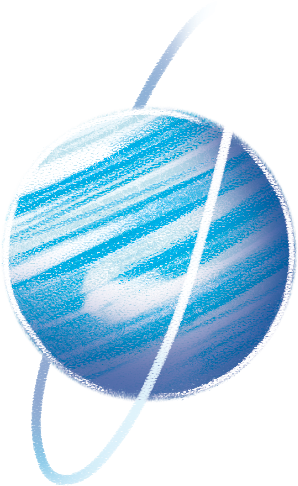
Uranus is the 7th planet away from the sun. It’s a rather strange planet. To begin with, it is laying down! We say that because the north and south poles on all the other planets point perpendicular to the orbital path (well, that’s a mouthful…), the north and south poles of Uranus are in line with (parallel to), so the north pole is facing the sun.
How big is Uranus compared to Earth?
Uranus is huge! It’s about 31,000 miles (50,000 km) across — that’s nearly four times the size of Earth. You could line up four Earths across Uranus and still have room to spare!
How long does it take for Uranus to orbit the Sun?
A year on Uranus takes a whopping 84 Earth years! But the weirdest thing is its tilt. Uranus is tipped on its side at almost 98 degrees, like it’s rolling around the Sun instead of spinning like the other planets. Scientists think it may have been knocked over by a massive crash a long time ago!
What is the surface of Uranus like?
Uranus doesn’t have a solid surface to stand on. Deep inside, it’s thought to have a rocky core wrapped in icy, slushy layers of water and ammonia. Around that is a thick atmosphere made mostly of hydrogen and helium — basically, a giant ball of chilly gas and mystery.
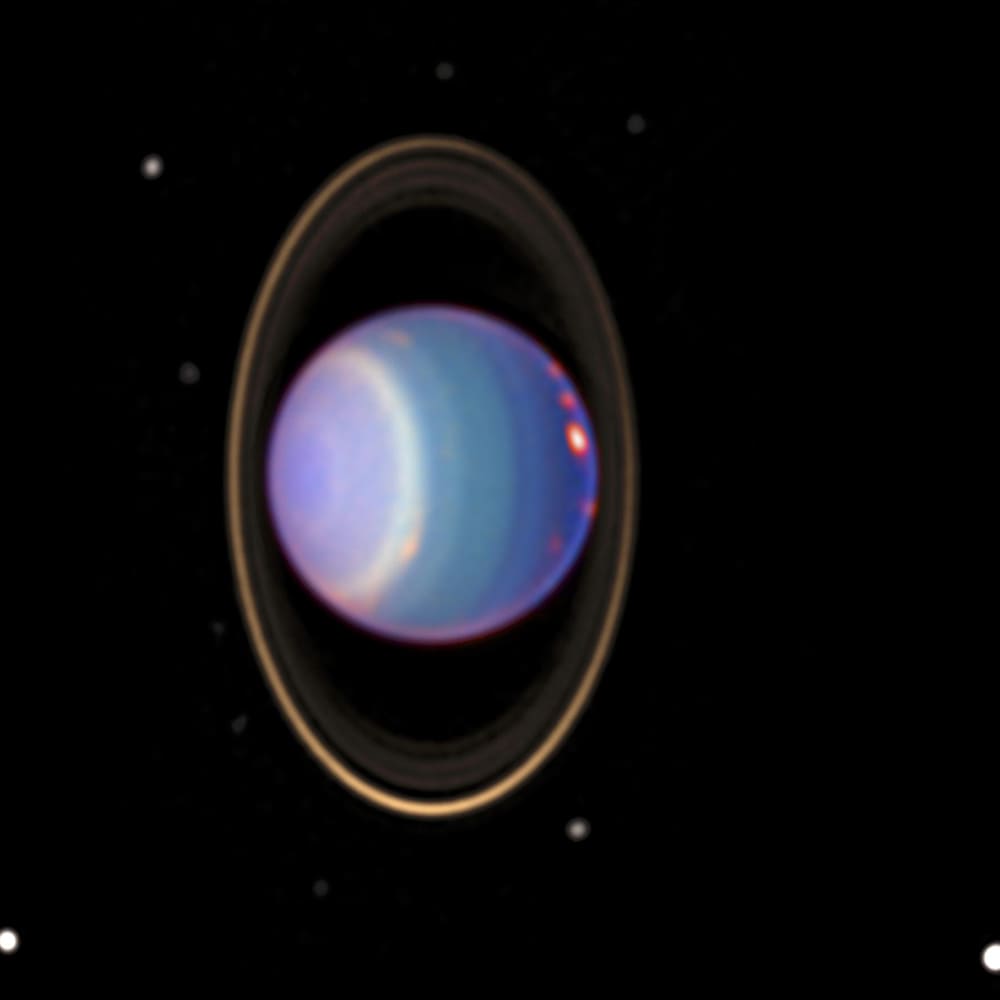

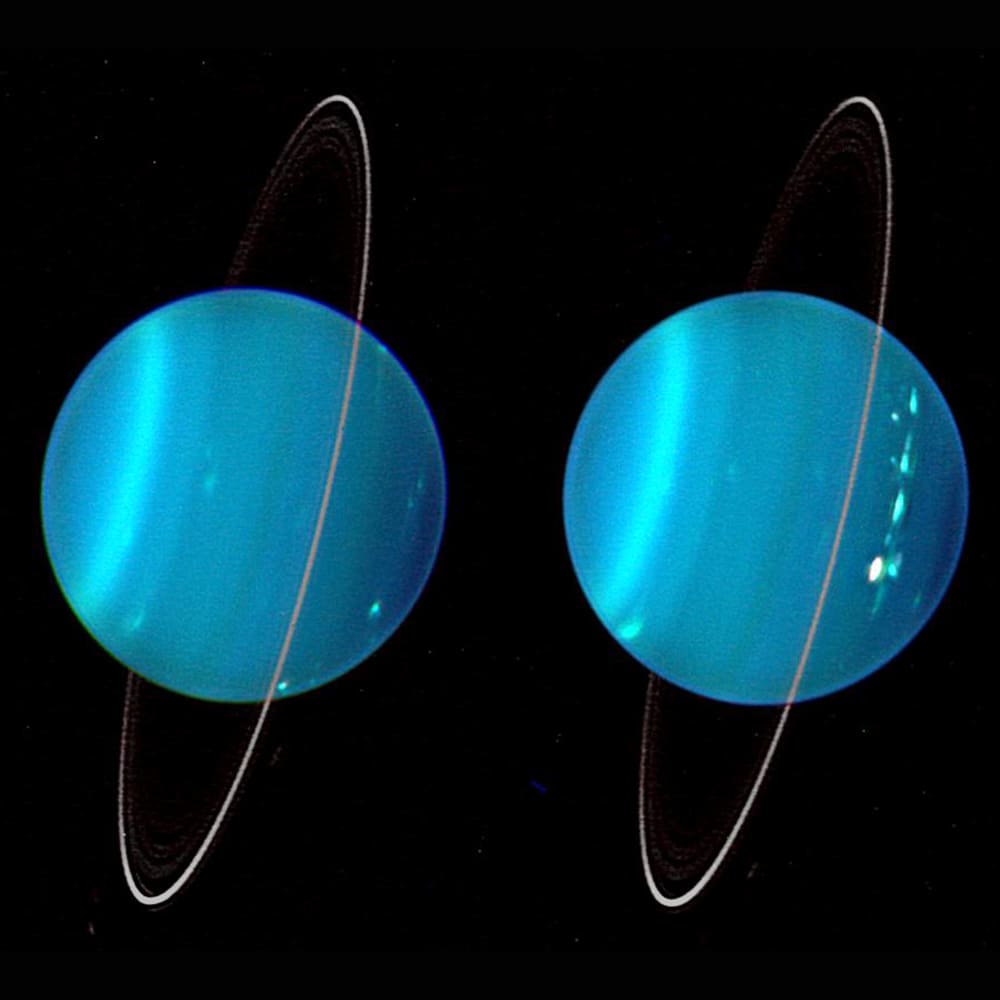
WOW! This planet is going to be really cool when we get there, but we haven’t gone there yet.
Are you ready for an Out Of This World Adventure?
-
Sale!

Cosmic Collection: Books 1–3 (Hardcover)
Original price was: $75.00.$67.50Current price is: $67.50. -
Sale!
Cosmic Collection: Books 1–3 (Paperback)
Original price was: $45.00.$40.50Current price is: $40.50. -
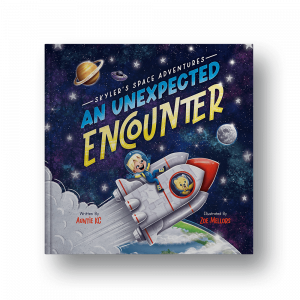
Skyler’s Space Adventures: An Unexpected Encounter (Hardcover)
$25.00 -

Skyler’s Space Adventures: An Unexpected Encounter (Paperback)
$15.00