
Saturn

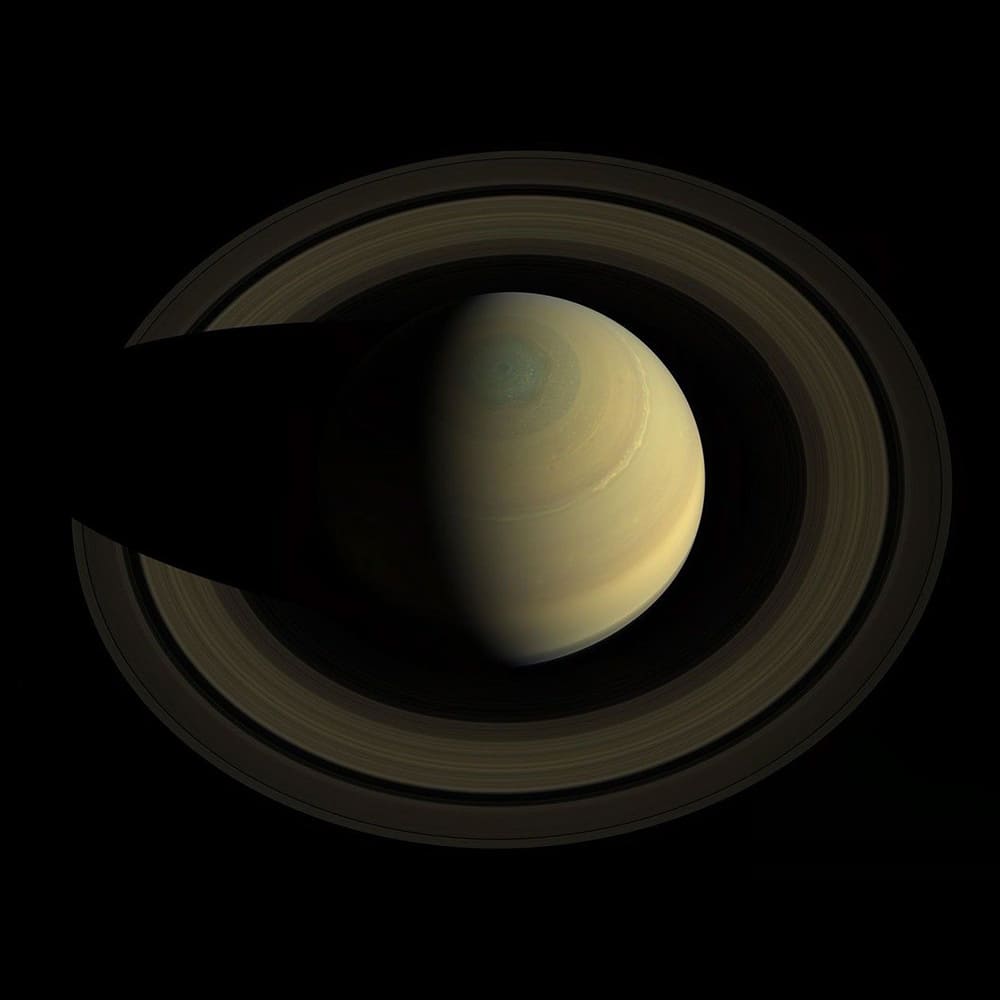
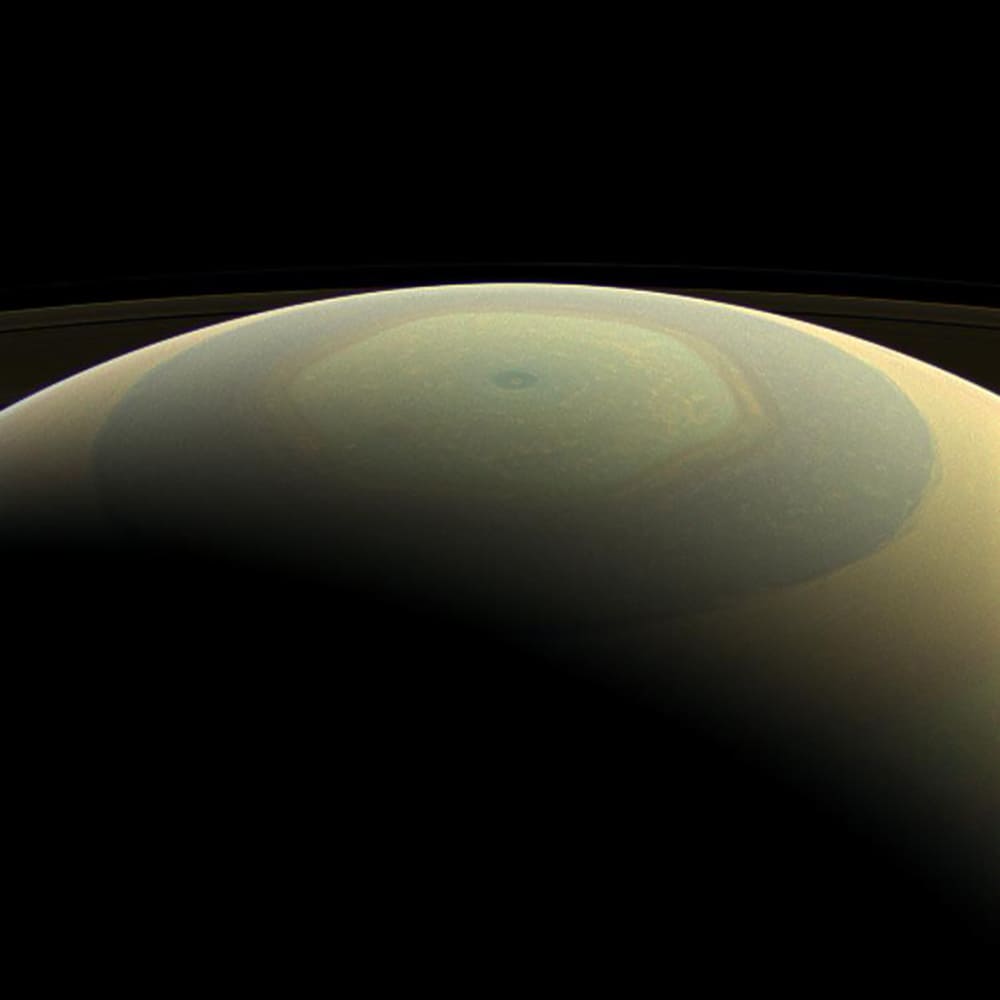
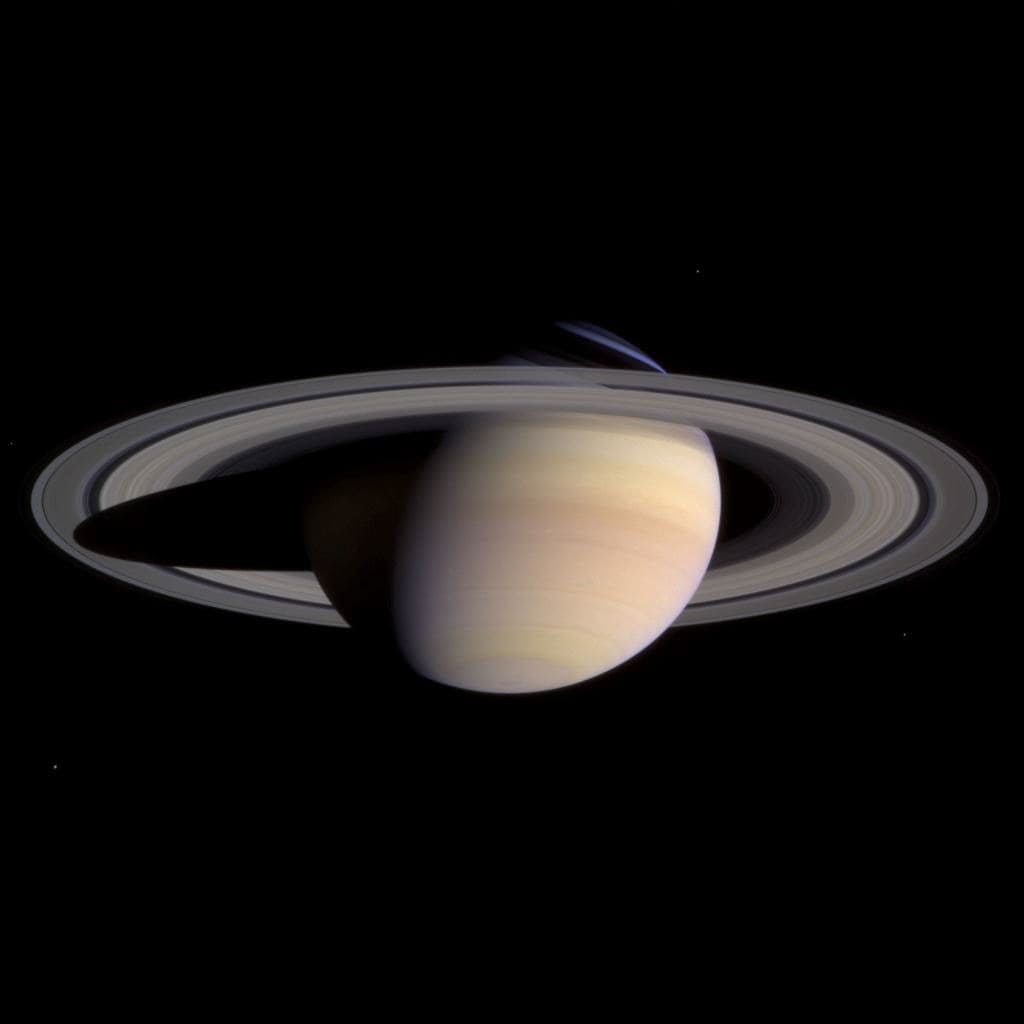
Saturn is a gas giant (there is no rocky surface to stand on). The most dramatic feature of Saturn is the presence of a wide band of rings, which consist of ice chunks and rocks. When Saturn appears in the night sky you can actually see the rings with a good pair of binoculars. There are more than 30 rings, which are 9 meters thick, only 100 million yrs old, and were likely formed by the break-up of an icy moon.
While the explorers in the book chose to land on a chunk of ice in Saturn’s rings, the planet has 174 moons and should humans decide to travel to Saturn, we would probably choose to land on one of those. Tritan and Enceladus are the largest 2 moons.
How big is Saturn compared to Earth?
Saturn is huge — about 9 times wider than Earth! In fact, it’s so big you could fit around 764 Earths inside it, like packing a giant space suitcase.
How long does it take for Saturn to orbit the Sun?
Saturn spins so fast that a whole day there is only about 10.7 hours long — that’s less than half an Earth day! But it takes its time going around the Sun, with one Saturn year lasting about 29 Earth years. That’s a lot of birthdays to wait for!
What is the surface like on Saturn?
Saturn doesn’t have a solid surface — it’s made mostly of swirling gases and liquids. If you tried to land there, there’d be nowhere to touch down! And flying through it wouldn’t work either — the deeper you go, the pressure and heat would crush, melt, and even vaporize anything that dared to try.

Deep Dive: Planet sounds
What are those really creepy sounds that Saturn and the rest of the planets make?
Makulu says that the sound is her friends singing (which it could be if there is a real alien up there).
But, as usual, it’s not that simple. Almost nothing in space is simple, but it is cool.
Scientists tell us that the “sounds” are actually energy moving out from the planet.
But what is energy?
Energy makes everything go. Sometimes your parents tell you that you have too much energy. That’s because you are moving too much.
But energy is bigger than that – energy makes everything go. Sometimes we can see the energy. We call that energy “light”. Sometimes we can hear energy. We call that energy “sound”.

A fun thing about energy; it comes in waves. If you have ever been to the ocean or a really big lake, you might have seen waves coming in to the shore. They look like rolling hills. Some days those hills (waves) are fat, so that if you are in the water you move over the waves kind of slowly. Sometimes the waves are not fat and, instead of floating calmly over the top of them, it feels really choppy.
Energy comes in waves just like that. Some of energy waves are really fat (in science we call those “long waves”, because “fat waves” doesn’t sound scientific). Then the scientists grouped the waves into sections and gave the sections names.

And of course, because they are scientists, when they drew the whole picture, they had to give it a fancy name that is hard to pronounce. They call it the “Electromagnetic Spectrum.”
Okay, so what does any of this have to do with planet sounds? Planets make “sounds” in 5 different ways. And all of them are just energy. The funny thing about the planet “sounds” is that most of them have REALLY long (fat) wavelengths. In fact, they sit to the left of the longest range in the picture. We need to add another whole range of fatness to make them fit.

WHEW!!!
Are you ready for an Out Of This World Adventure?
-
Sale!

Cosmic Collection: Books 1–3 (Hardcover)
Original price was: $75.00.$67.50Current price is: $67.50. -
Sale!
Cosmic Collection: Books 1–3 (Paperback)
Original price was: $45.00.$40.50Current price is: $40.50. -
Skyler’s Space Adventures: An Unexpected Encounter (Hardcover)
$25.00 -

Skyler’s Space Adventures: An Unexpected Encounter (Paperback)
$15.00