
Neptune

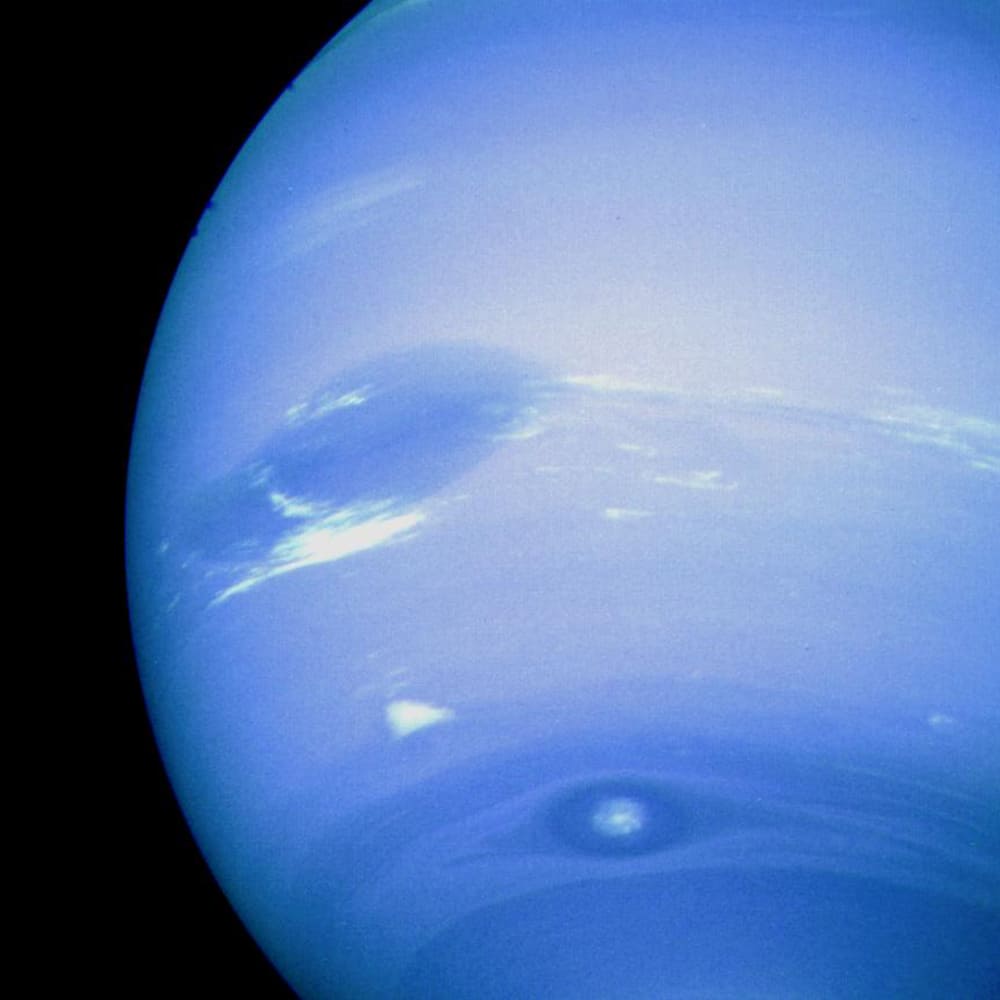
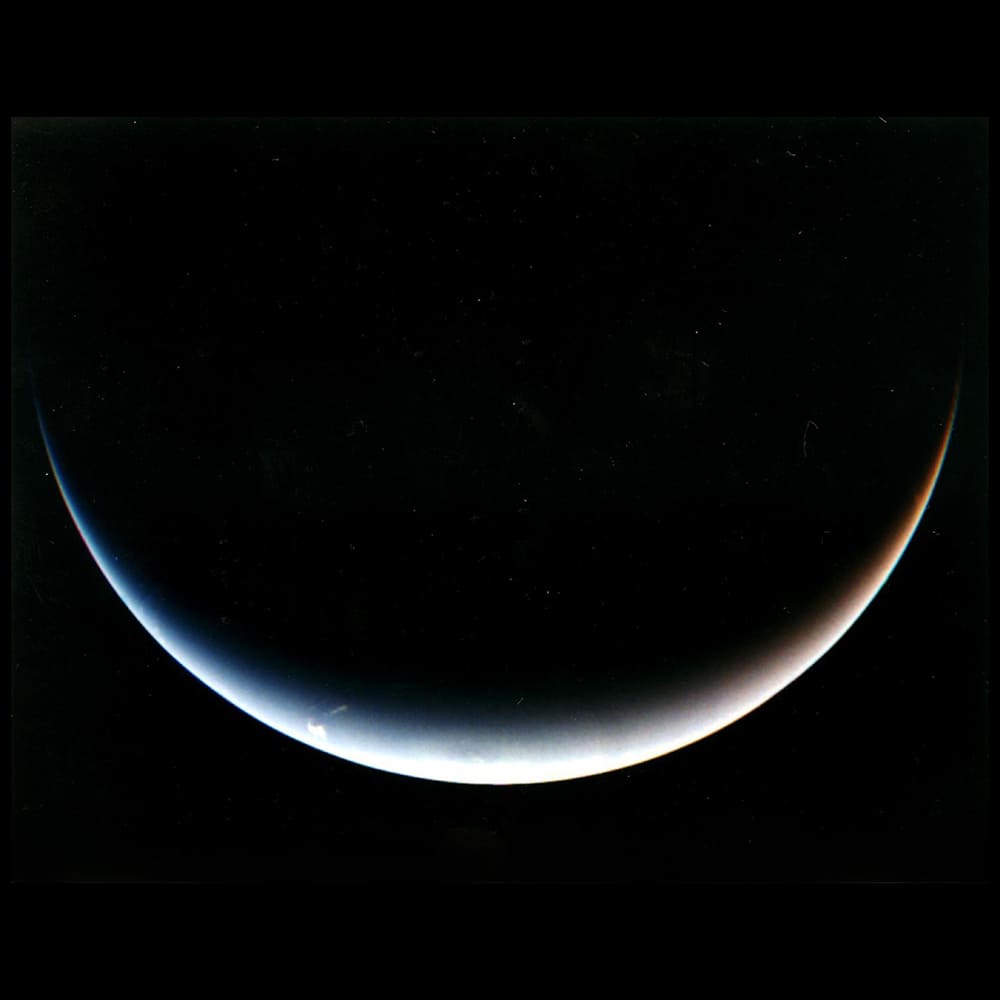
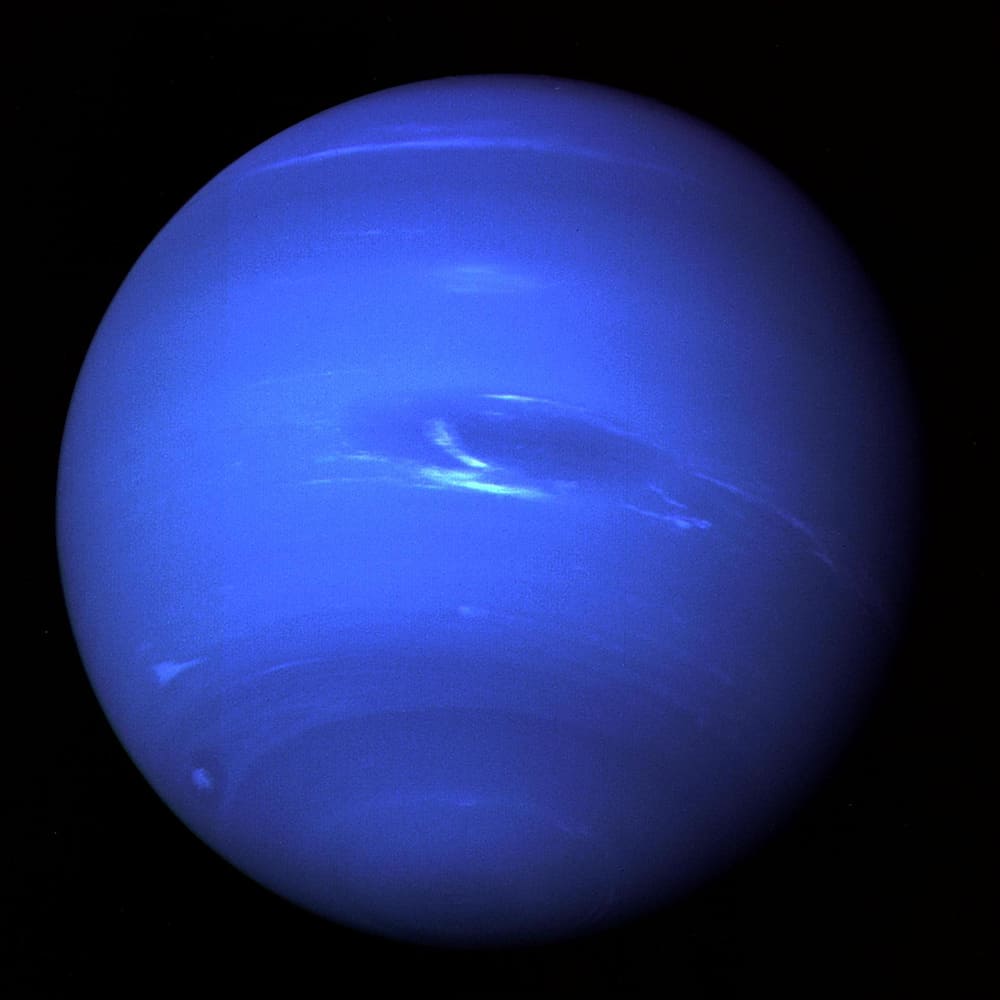
The most striking feature of Neptune, the furthest planet from the Sun, is its brilliant blue color. The color is due to the thick fog of ammonia, water, and methane that make up the atmosphere. The planet has a liquid ocean (more like a slush than a liquid) under the methane surface, and an Earth-sized solid core. Neptune doesn’t have a rocky surface to land on, but since it is so cold, the gases are frozen, and we call it an ice giant.
Neptune also has a magnetic field, fourteen moons (Triton is biggest; thought to be a captured dwarf planet), and 6 rings (like the rings around Saturn), although they are hard to see,
Neptune also has really strange weather; wind speeds are the most outstanding feature on the surface.
How big is Neptune compared to Earth?
Neptune is a super-sized planet — about four times wider than Earth! If you lined up four Earths in a row, they’d stretch right across Neptune. And if you could open it up, you’d be able to squeeze about 57 Earths inside!
How long does it take for Neptune to orbit the Sun?
A day on Neptune zooms by in just 16 hours — shorter than an Earth day! But a year on Neptune is super slow… it takes about 165 Earth years for Neptune to go all the way around the Sun.
What is the surface of Neptune like?
Neptune doesn’t have a solid surface you could stand on. It’s a giant mix of gas and ice, with wild, stormy clouds made of hydrogen, helium, and methane — that’s the stuff that gives Neptune its deep blue color!
WOW! This planet is going to be really cool when we get there, but we haven’t gone there yet.

Are you ready for an Out Of This World Adventure?
-
Sale!

Cosmic Collection: Books 1–3 (Hardcover)
Original price was: $75.00.$67.50Current price is: $67.50. -
Sale!
Cosmic Collection: Books 1–3 (Paperback)
Original price was: $45.00.$40.50Current price is: $40.50. -

Skyler’s Space Adventures: An Unexpected Encounter (Hardcover)
$25.00 -

Skyler’s Space Adventures: An Unexpected Encounter (Paperback)
$15.00