
Moon

Our nearest neighbor, the Moon is thought to have been formed when a planet a bit smaller than Earth smacked into the Earth and knocked much of the Earth’s crust off. The effects of the spinning motions and gravity eventually led to the reformation of the planet (Earth) and a very large Moon. While many planets have moons (some of them have a lot of moons) Earth’s Moon is larger than most relative to the size of the planet and it is the closest moon to any planet.
The Moon is the only celestial body that Earthlings have visited. 27 People from the United States visited the Moon in 9 missions. 12 of them landed on the Moon and walked on its surface.
How big is the Moon compared to Earth?
How long does it take for the Moon to orbit Earth?
What is the Moon’s surface like?
The Moon has a hard, rocky surface with lots of holes called craters and tall mountains. These craters were made when space rocks like asteroids and comets crashed into it a long time ago


Deep Dive: The Apollo Missions
What were the Apollo Missions?
A set of space missions that built on earlier programs (Mercury and Gemini) to take humans to the Moon.
How many Apollo missions were there?
The early Apollo missions were done to test the spacecraft. The first missions to fly were Apollo 4, 5, and 6, and these also did not have any astronauts on board.
Thus, the missions in which astronauts went to space were Apollo 7 – 17. Of these, Apollo 8, 10, 11, 12, 13, 14, 15, 16, and 17 went to the Moon. Apollo 11, 12, 14, 15, 16, and 17 had astronauts land on the surface of the Moon. The missions are described below.
Apollo 7

Crew
- Walter (Wally)
- Schirra (commander),
- Walter Cunningham
(lunar module pilot), - Donn Eisele
(command module pilot)

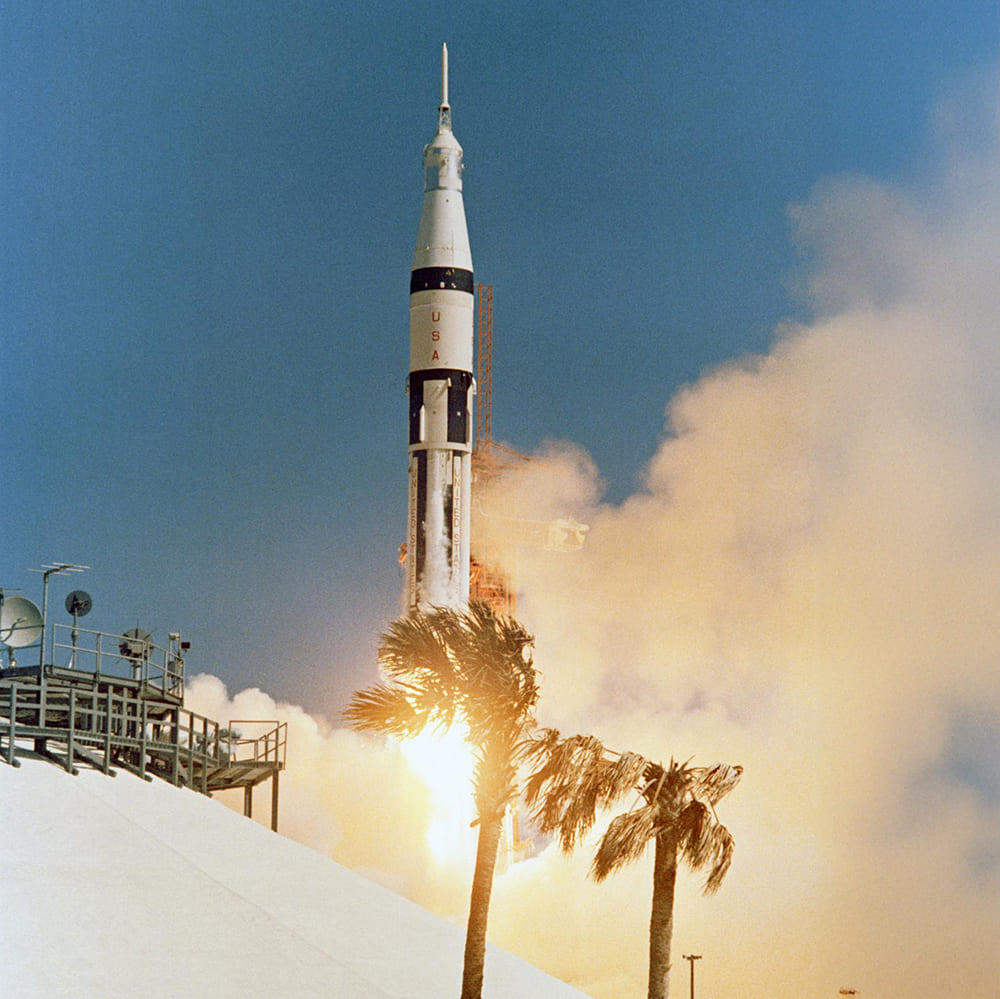
The first flight test
Tested the command module (the ship that carries 3 astronauts to lunar orbit).
Tested the lunar module (the ship that carries 2 of the astronauts from orbit to the surface of the Moon)
Fun Fact:
The first time Commander Schirra fired up the Service Module engine, it fired so hard that it knocked the astronauts back in their seats. In response, Commander Schirra yelled “YABADABADOO!” like the old cartoon character Fred Flintstone.
Not-so-fun Fact:
All 3 astronauts got colds in space and felt very sick and uncomfortable for the entire flight.
Apollo 8
Crew
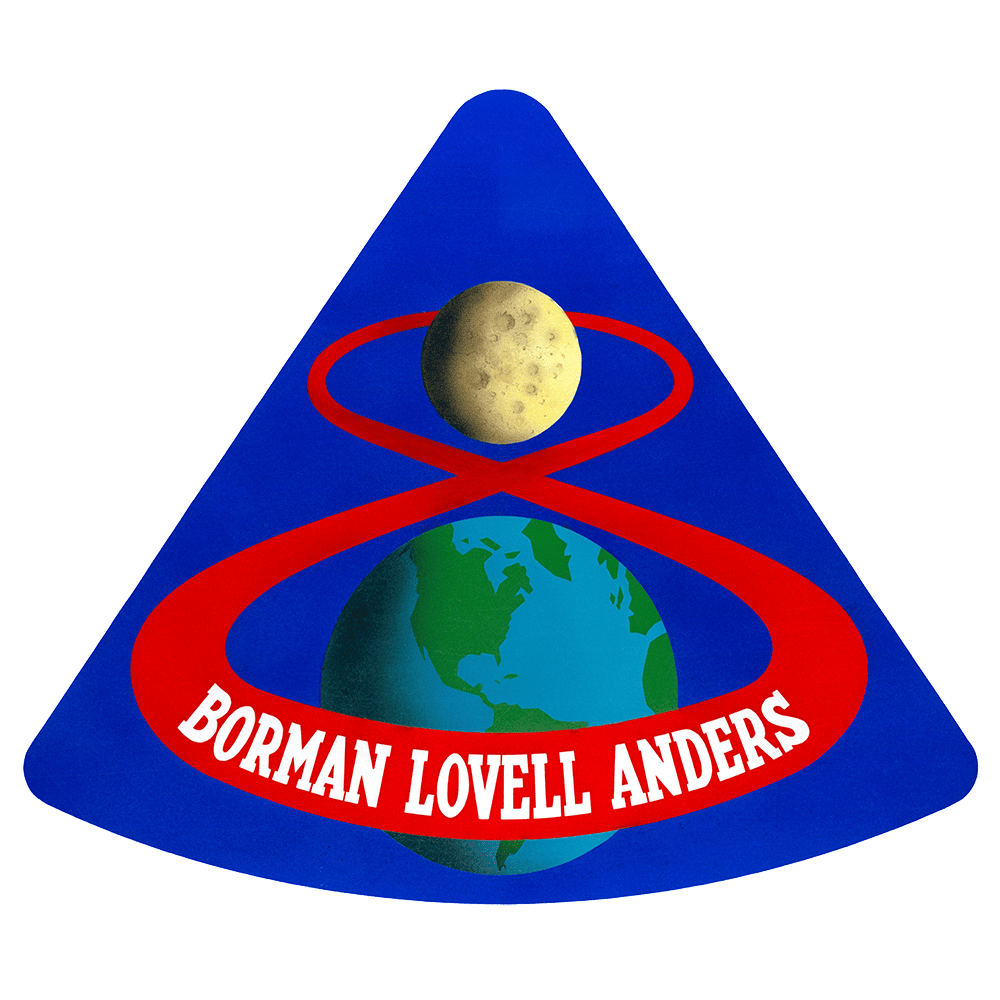
- Frank Borman (commander),
- Bill Anders
(lunar module pilot), - James Lovell
(command module pilot)
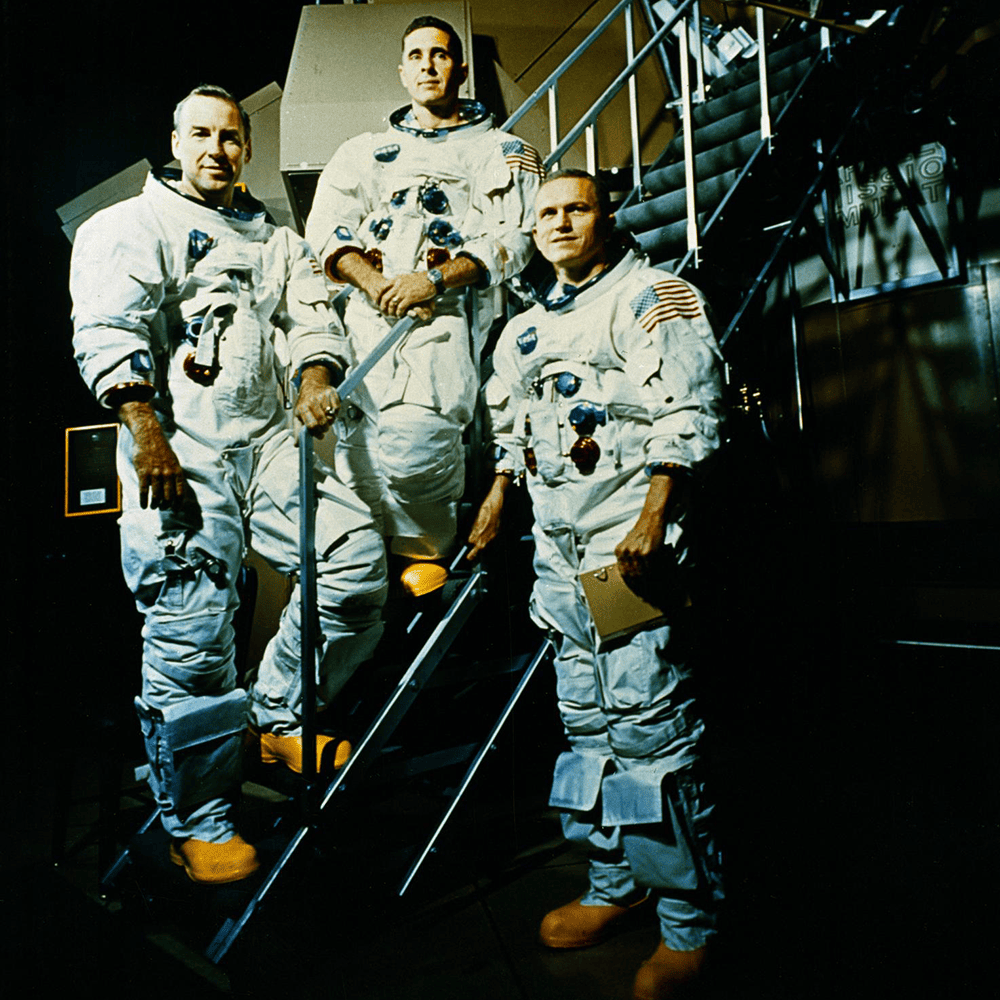
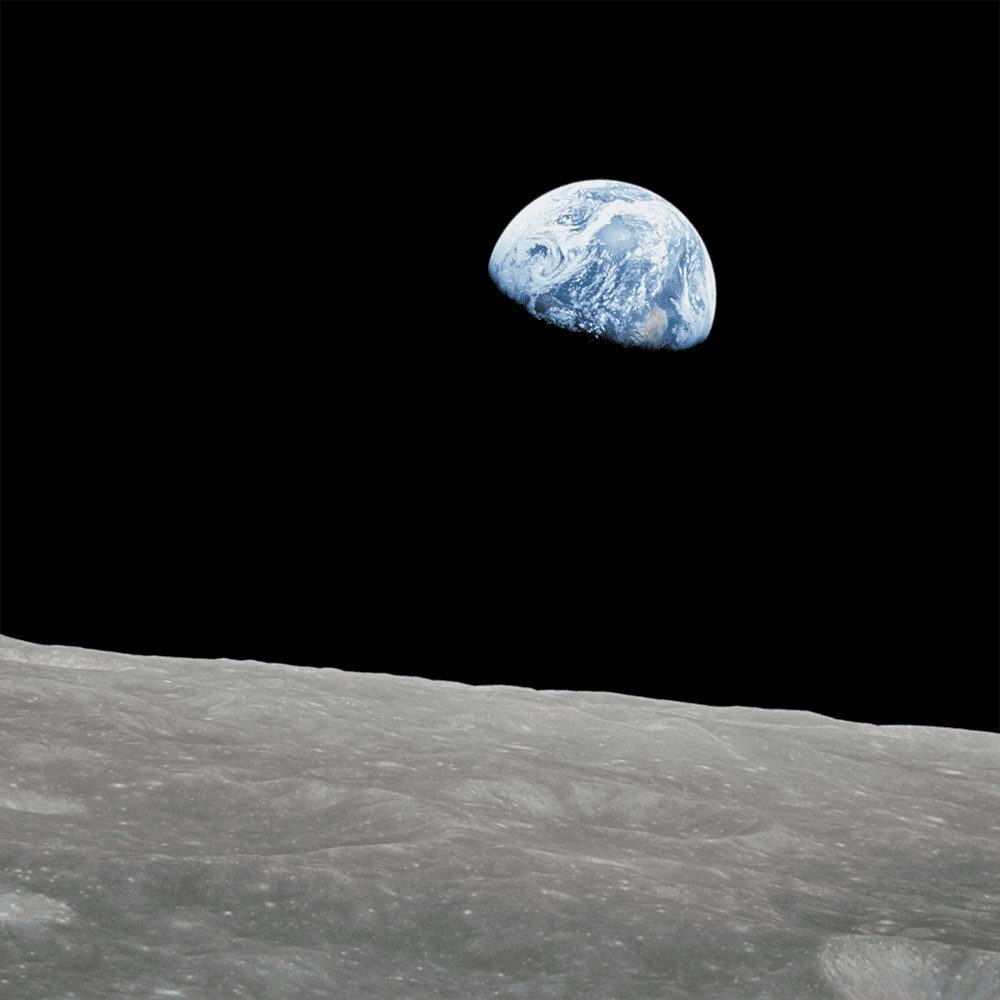
The first crewed mission to the Moon. But they did not land on the Moon. They orbited the Moon 10 times, which took 20 hours
Fun Fact:
Bill Anders took the first picture of the Earth from the Moon.
Apollo 9
Crew
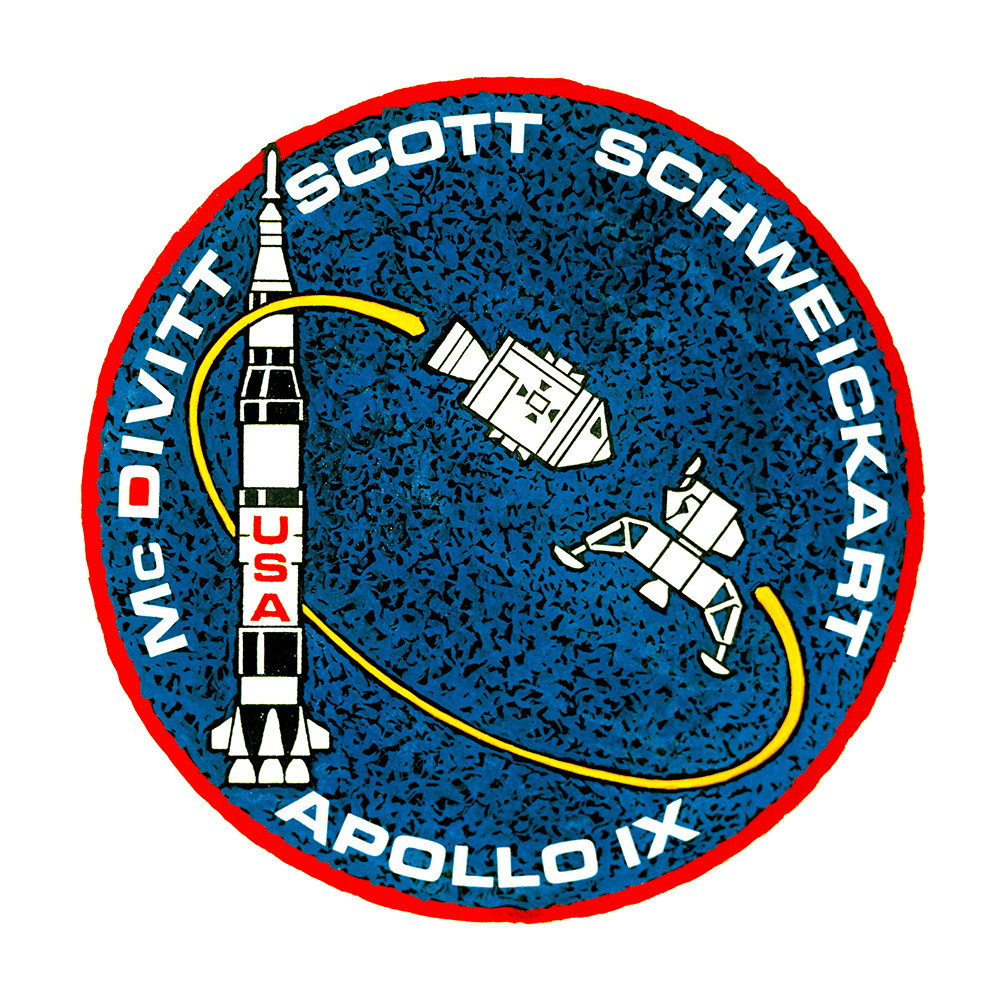
- Jim McDivitt (commander),
- Russell (Rusty) Schweikert
(lunar module pilot), -
David Scott
(command module pilot)
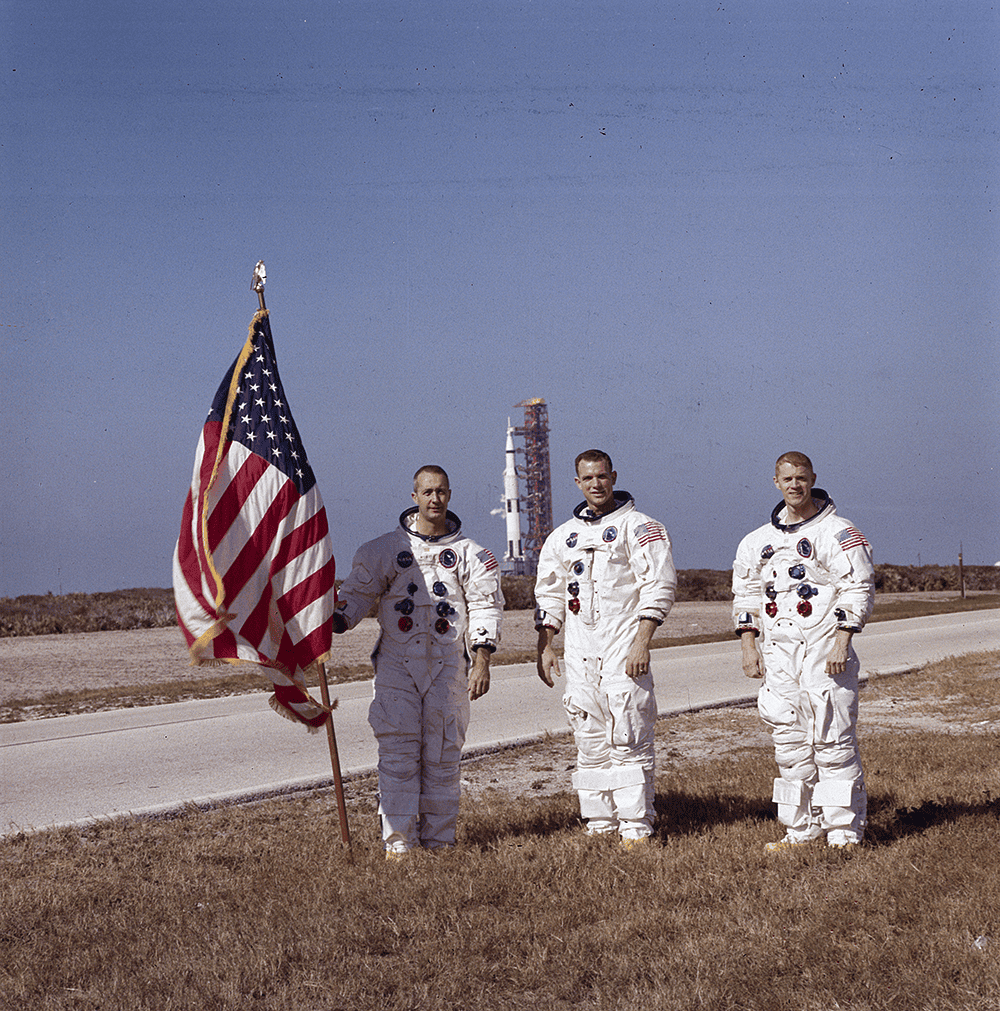
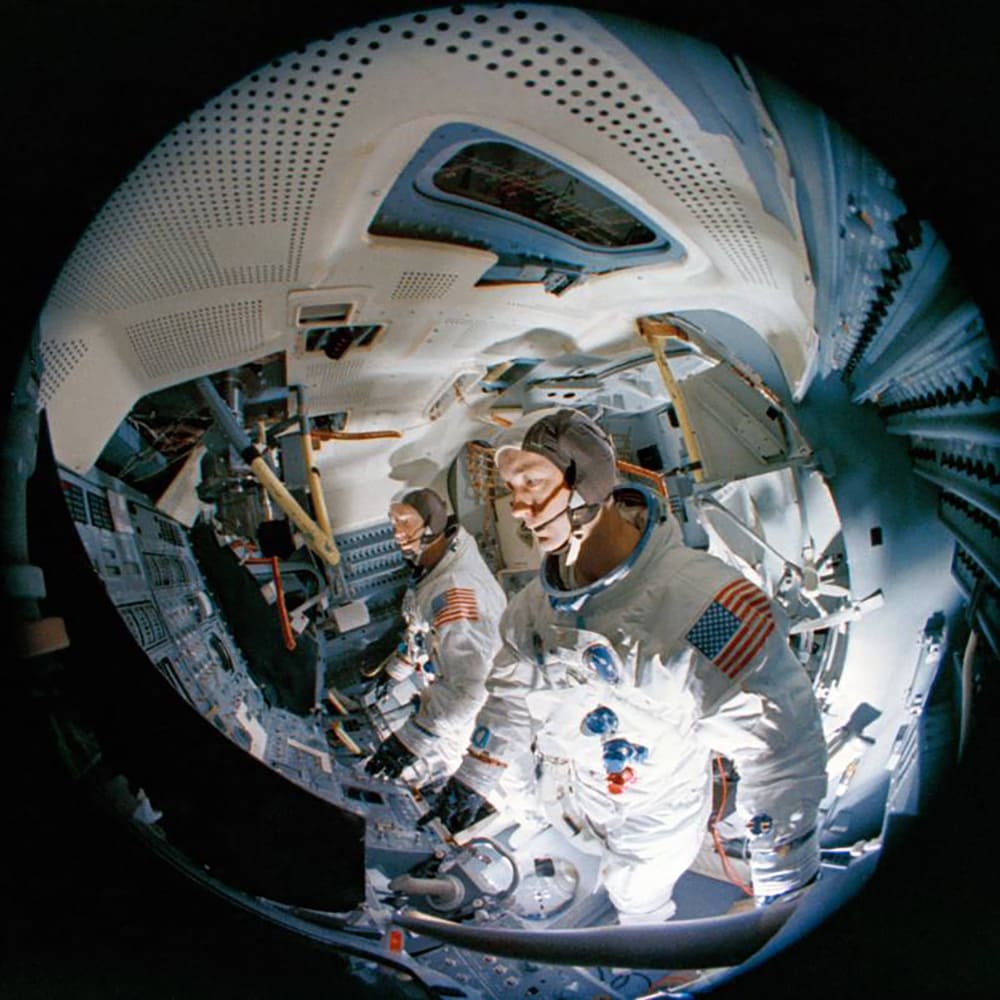
First test of all aspects of a lunar landing, performed while still orbiting the Earth.
Fun Fact:
- This was the first time astronauts got into the Lunar Module in space.
Apollo 10
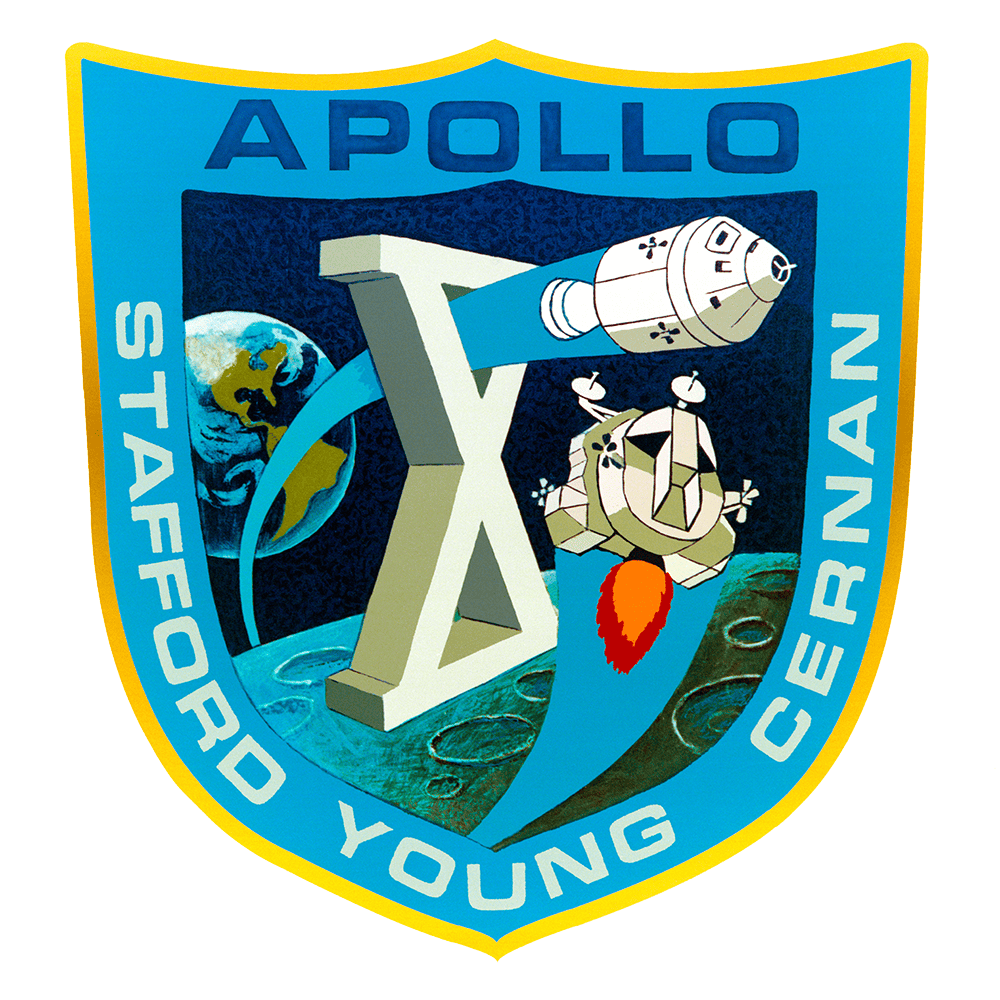
Crew
- Thomas Stafford (commander),
- Eugene Cernan
(lunar module pilot), - John Young
(command module pilot)

Dress rehearsal for the first landing on the Moon. They also did not land on the Moon. Stafford & Cernan got into the lunar module, undocked from the command module, and headed down toward the surface, but levelled out at 9 miles and stayed for about 8 hours.

Not-so-fun Fact:
- When the lunar module crew (Stafford & Cernan) released the decent stage (the one used to go down the Moon), the rest of the ship started to spin out of control. Fortunately, the astronauts were able to fix it.
Apollo 11
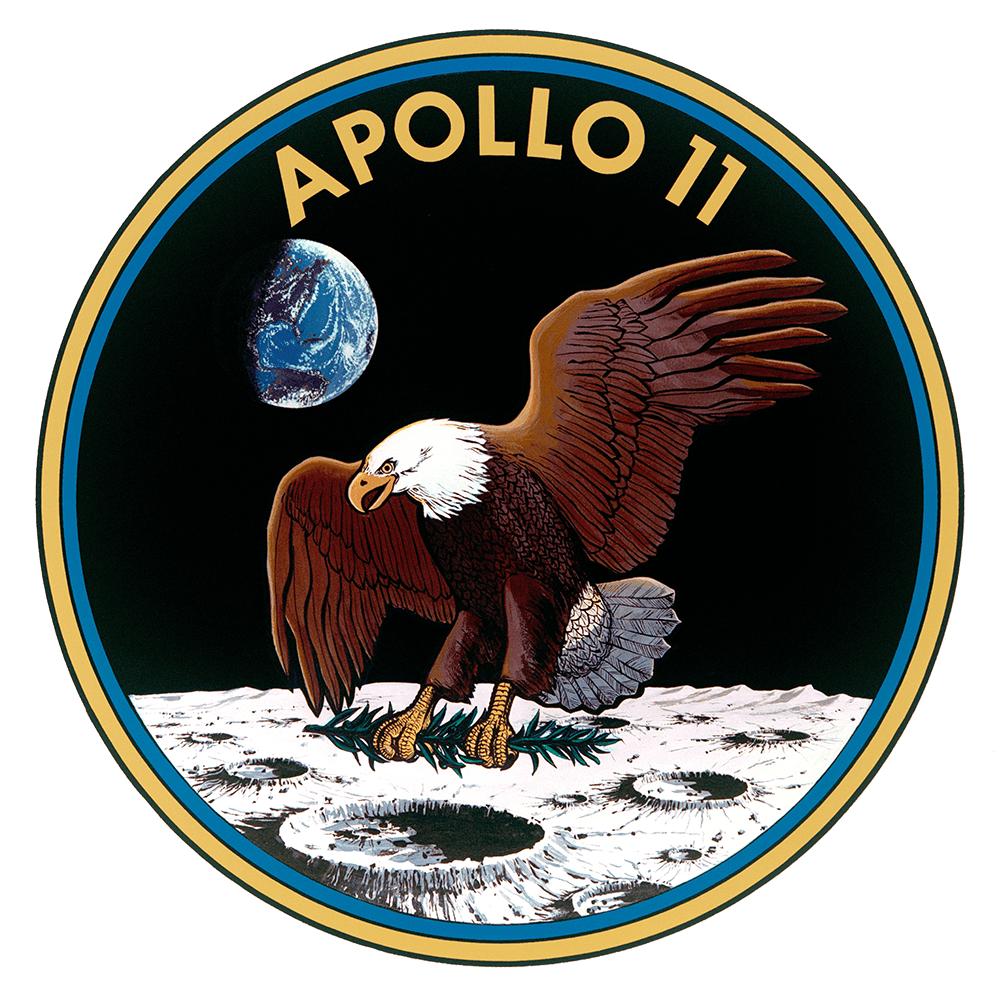
Crew
- Neil Armstrong (commander),
- Edwin (Buzz) Aldrin
(lunar module pilot), -
Michael Collins
(command module pilot)
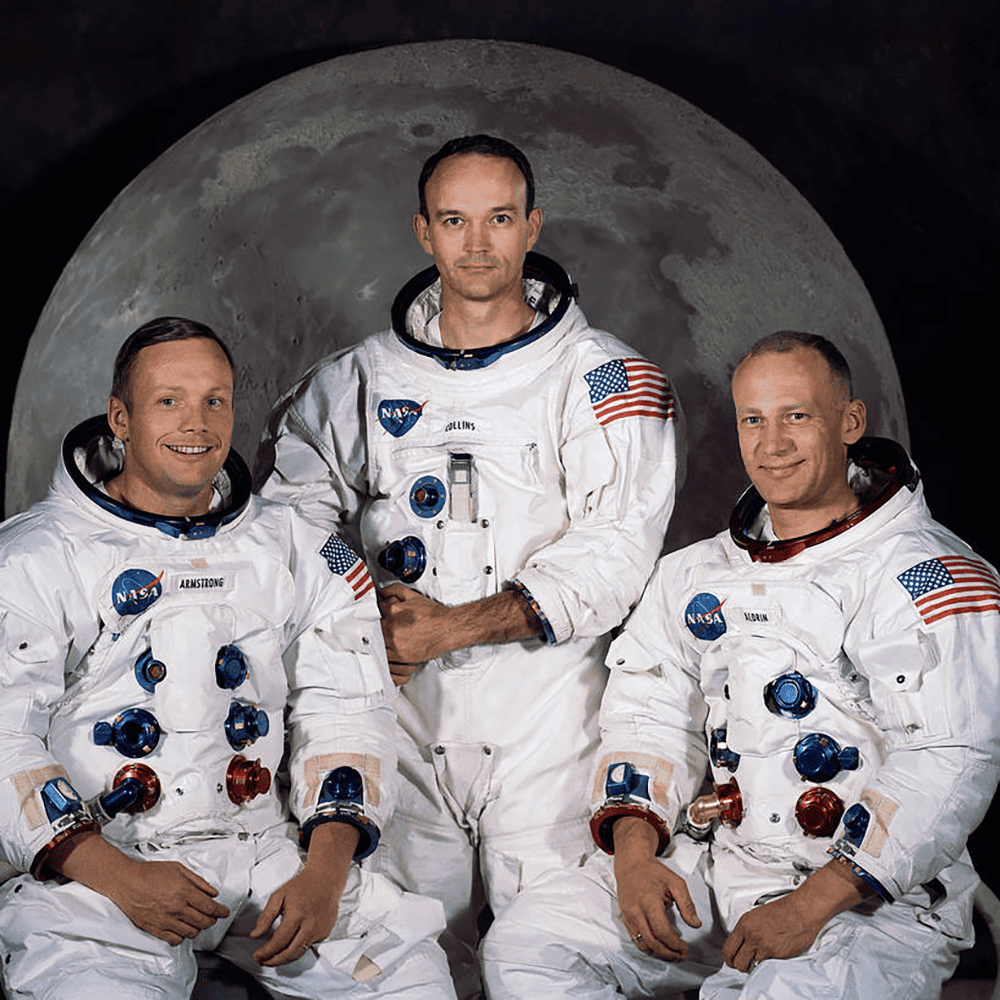
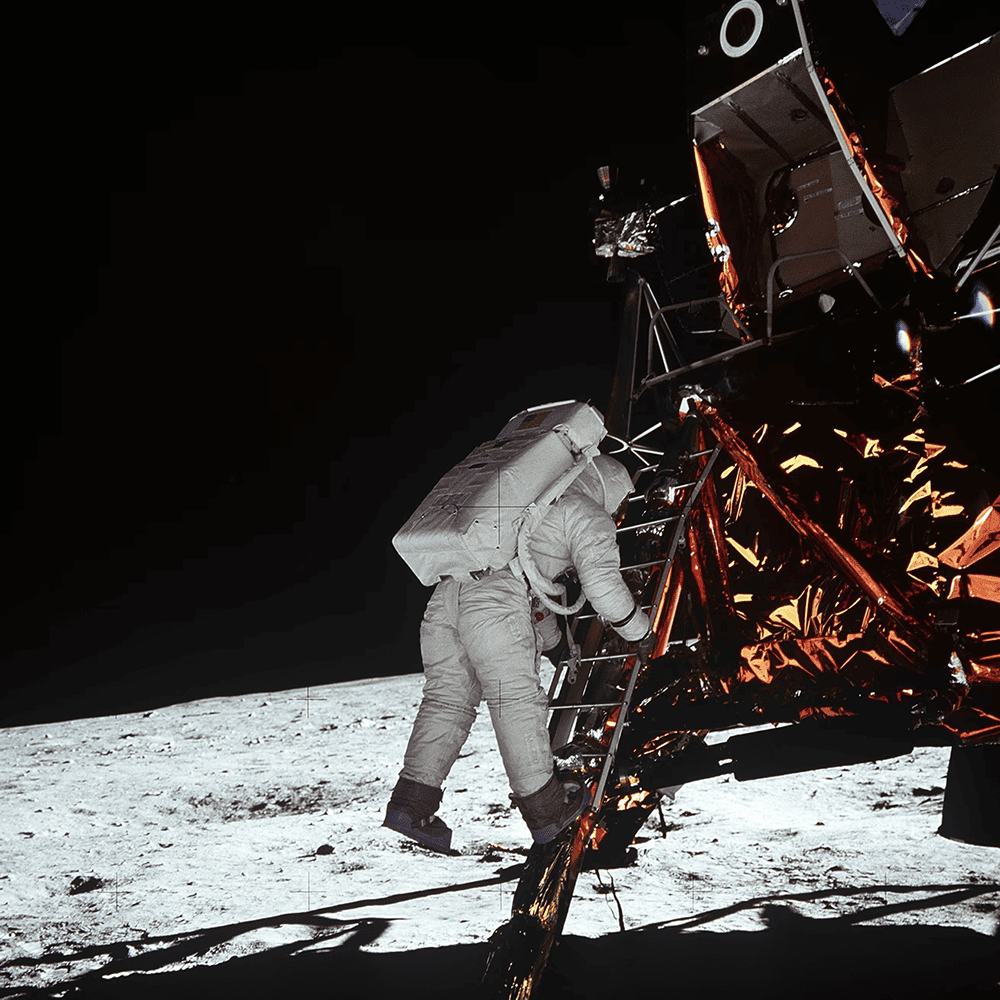
The first landing on the Moon!!! Armstrong & Aldrin spent 21 hours and 36 minutes on the surface of the Moon and left their ship to walk on the surface for 2 and a half hours
Fun Fact:
- Mike Collins was the only person who couldn’t watch the first landing on the Moon
Apollo 12

Crew
- Pete Conrad (commander),
- Alan Bean
(lunar module pilot), - Rich Gordan
(command module pilot)
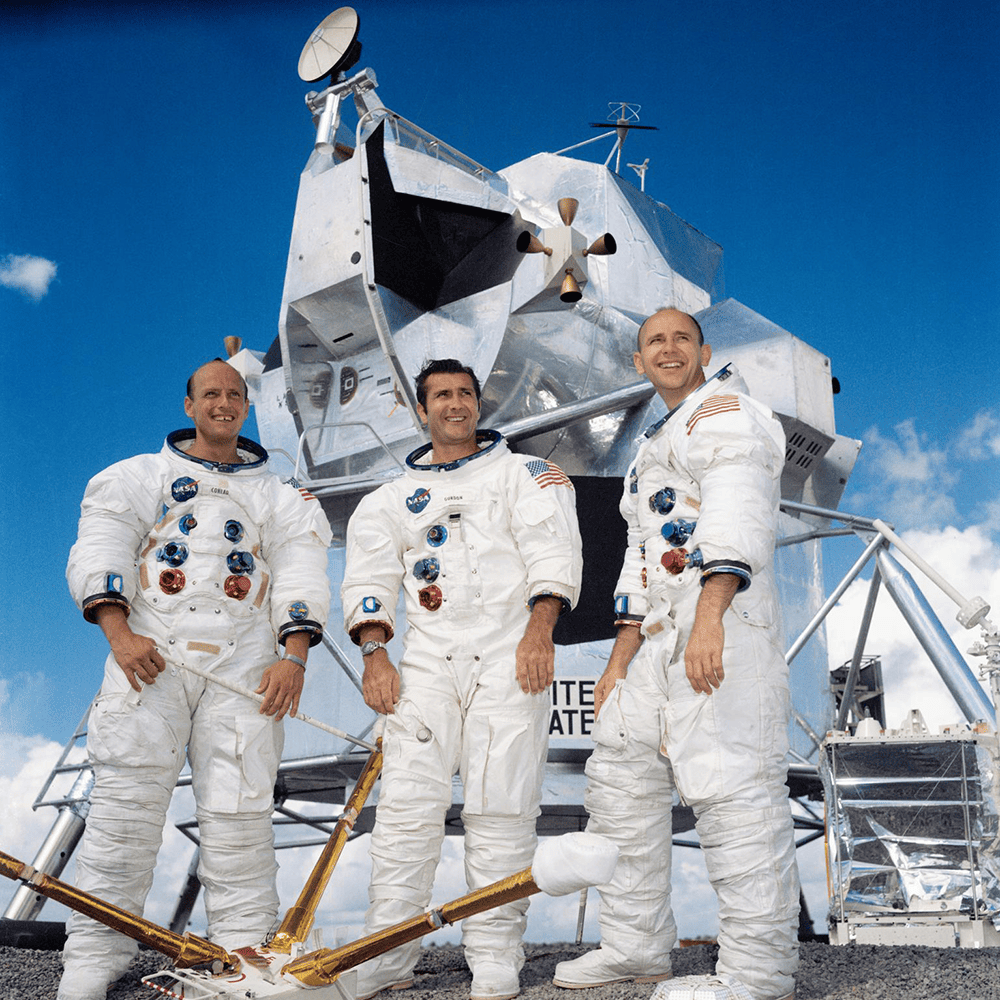
This mission is called the pin-point landing because Pete Conrad landed the LEM within walking distance to their target, the Surveyor 3 spacecraft. The first mission to do some exploration of the Moon and set up a number of experiments including the ASLEP equipment, which sent a trillion bits of science data to Earth.

Fun Fact:
- Every astronaut in this crew served in the Navy, which is why the patch has a sailing ship on it.
Not-so-fun Fact:
- The Saturn V rocket, which launched the astronauts to space, was hit by lightning twice during the launch.
Apollo 13
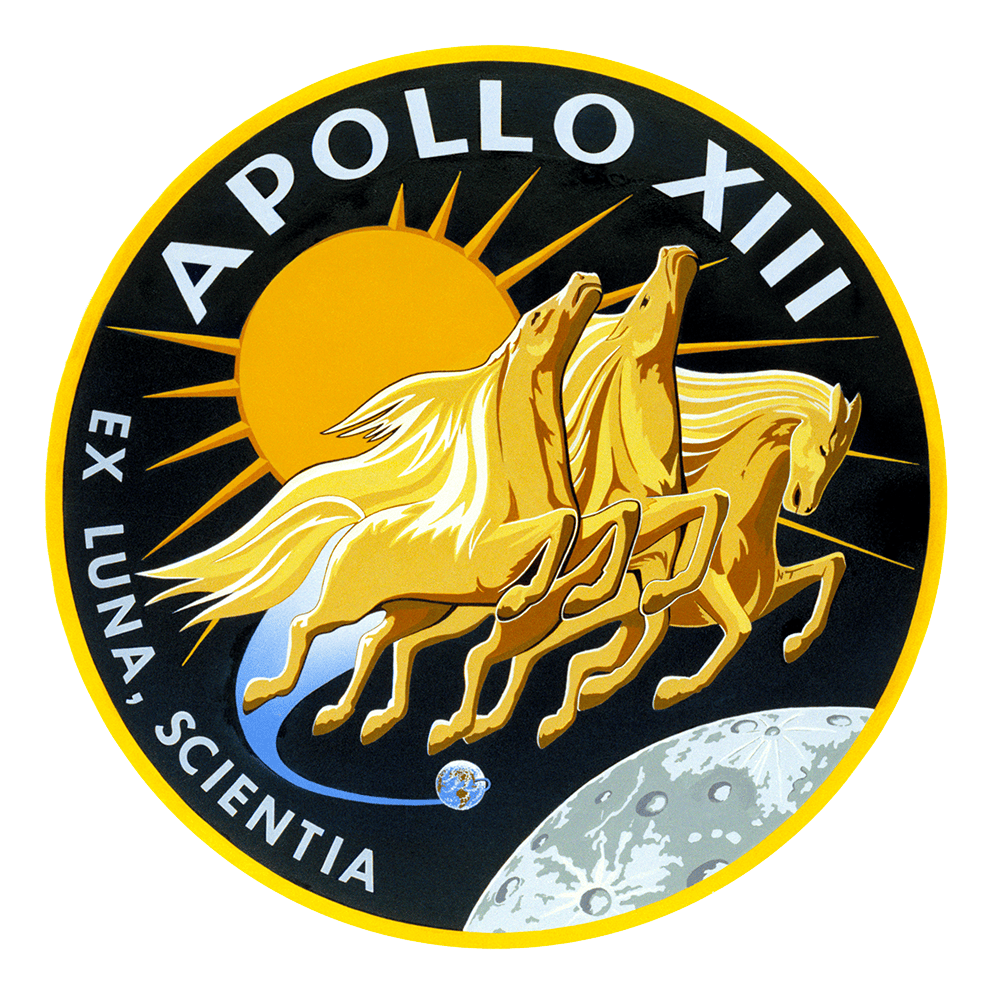
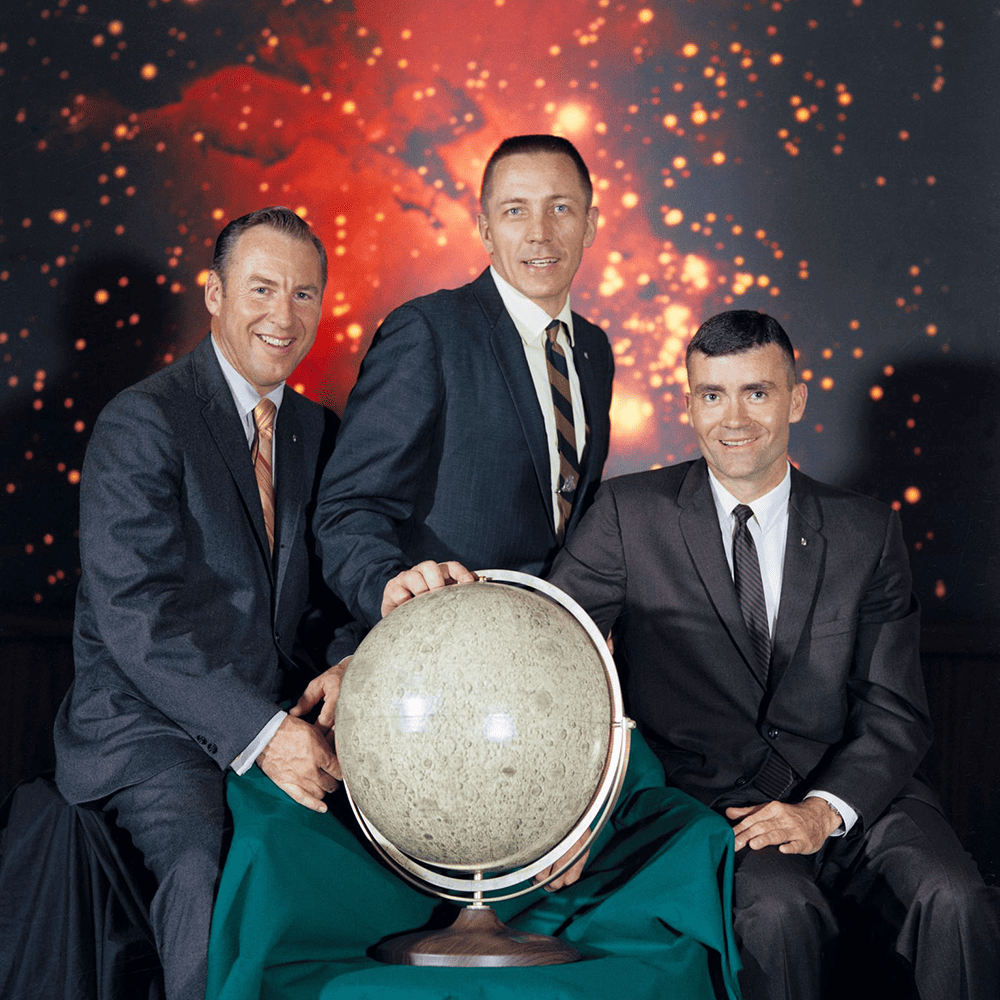
Crew
- James Lovell (commander),
- Fred Haise
(lunar module pilot), - John (Jack) Swigert
(command module pilot)
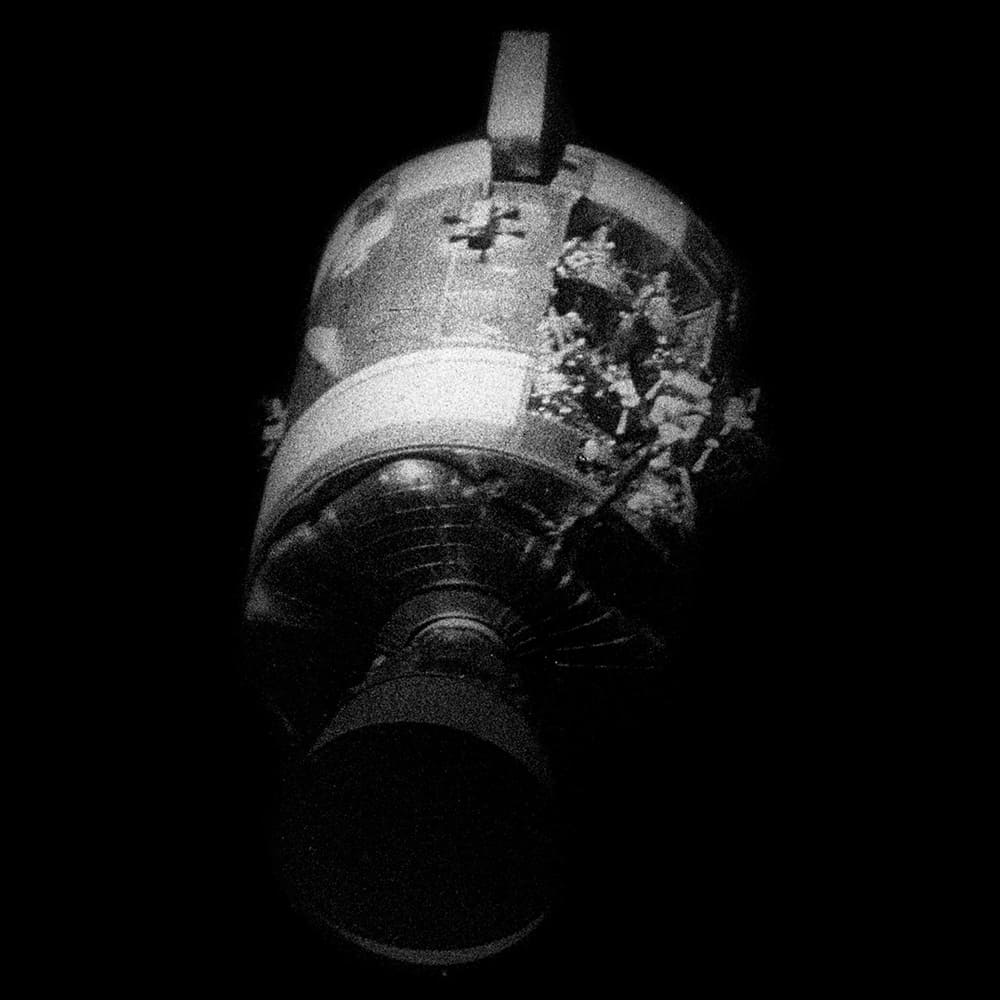
This was intended to be an exploration of the Frau Mauro highlands, but due to an explosion in the spacecraft, the astronauts were not able to land on the Moon.
Kind-of-fun Fact
- The rescue of the crew on this mission was one of the most dramatic events in NASA history. This story was made into the movie “Apollo 13”.
Apollo 14
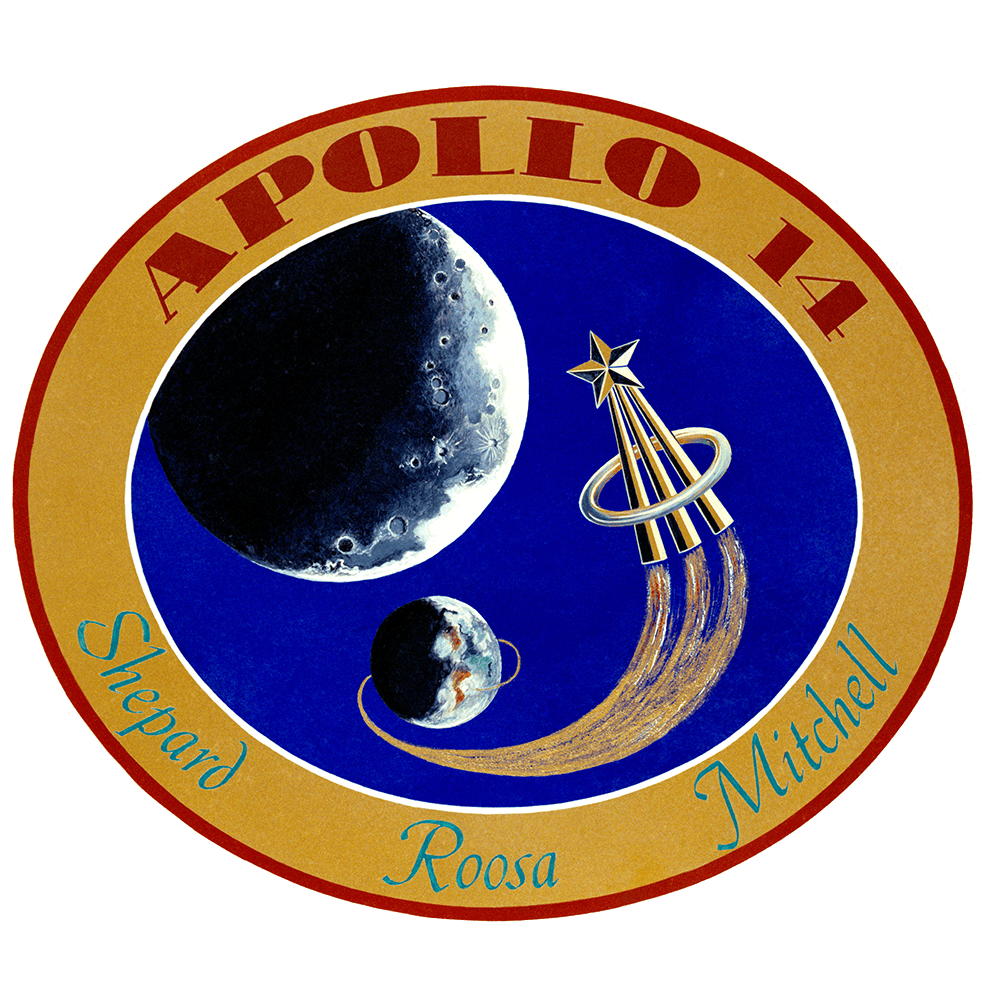
Crew
- Alan Shepard (commander),
- Edgar Mitchell
(lunar module pilot), - Stuart Roosa
(command module pilot)
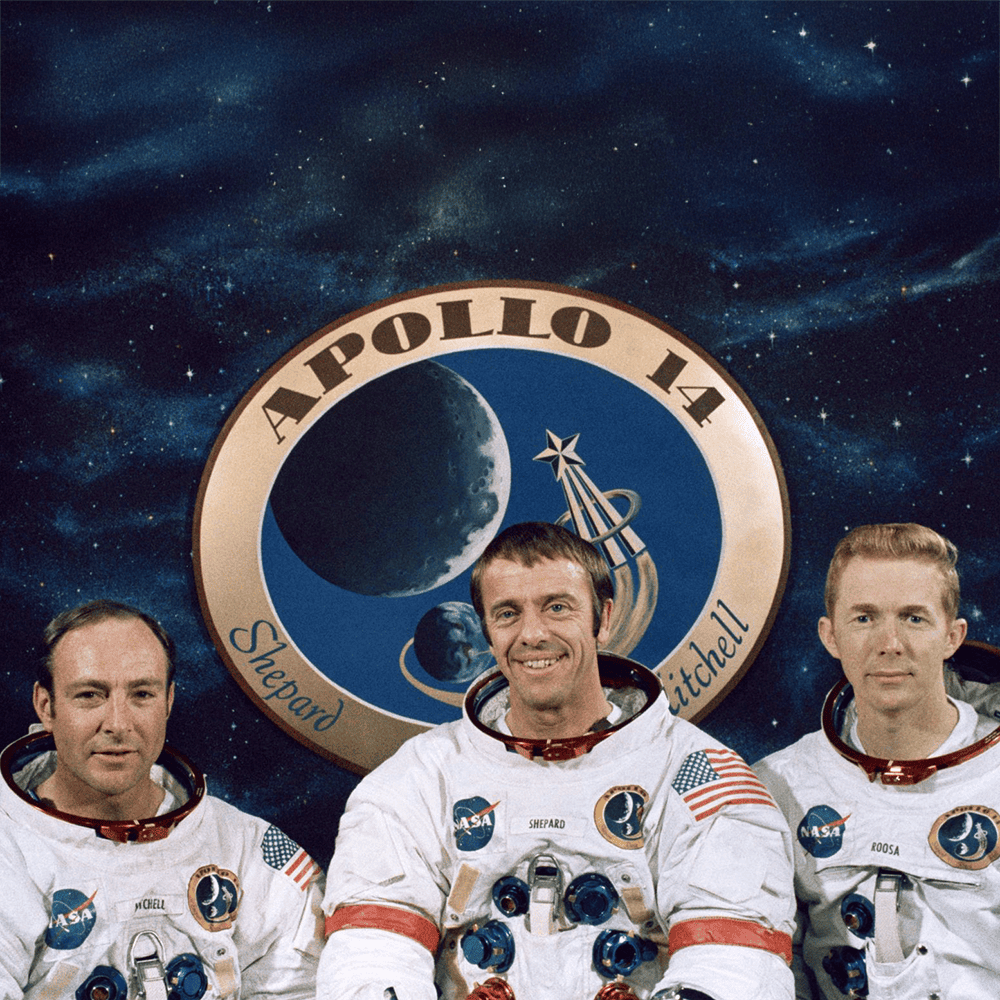
Astronauts Shepard & Mitchell did explore the Frau Mauro region and did a number of geology experiments.

Fun Fact:
- Al Shepard created a golf club out of equipment in the capsule and hit a golf ball on the Moon
Apollo 15
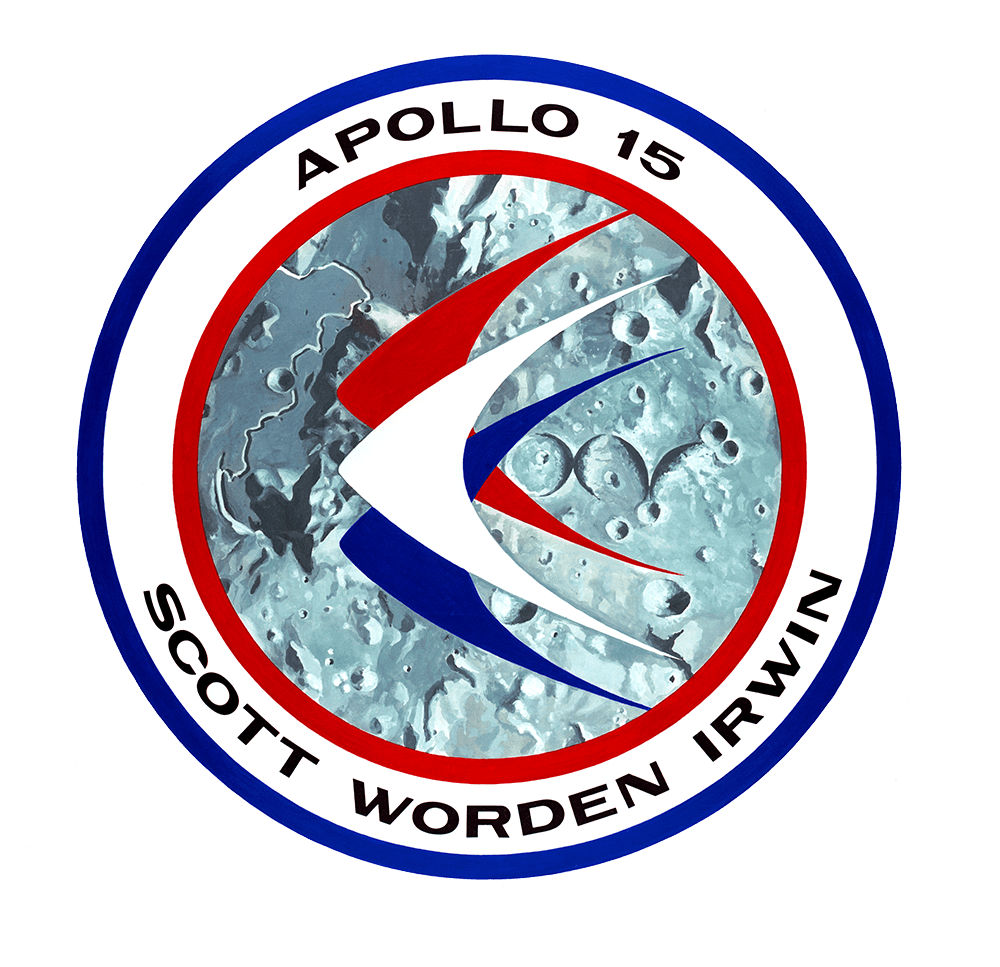
Crew
- David Scott (commander),
- James Irwin
(lunar module pilot), - Alfred Worden
(command module pilot)

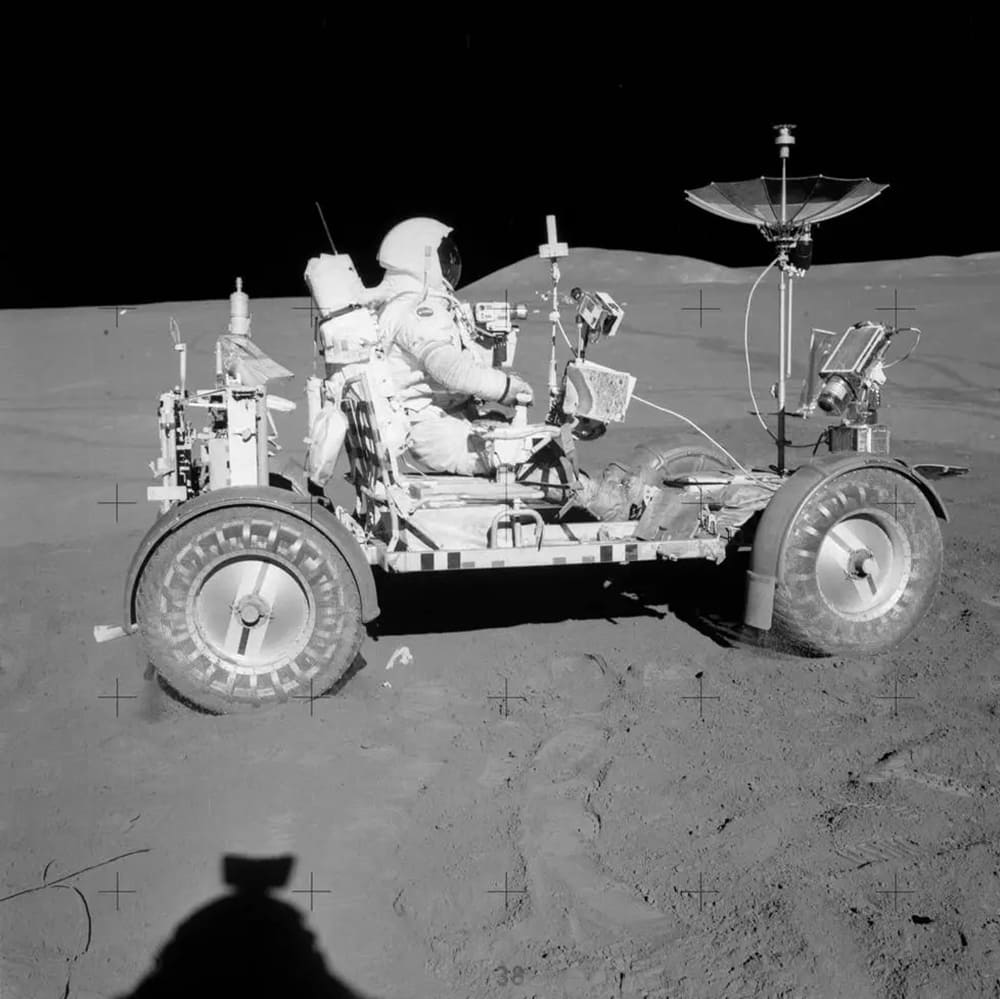
This was the first mission that included the Lunar Rover, which allowed the astronauts to travel farther away from the LEM to explore.
Fun Fact:
- Astronaut Dave Scott demonstrated Galileo’s declaration that objects of different densities fall at the same rate.
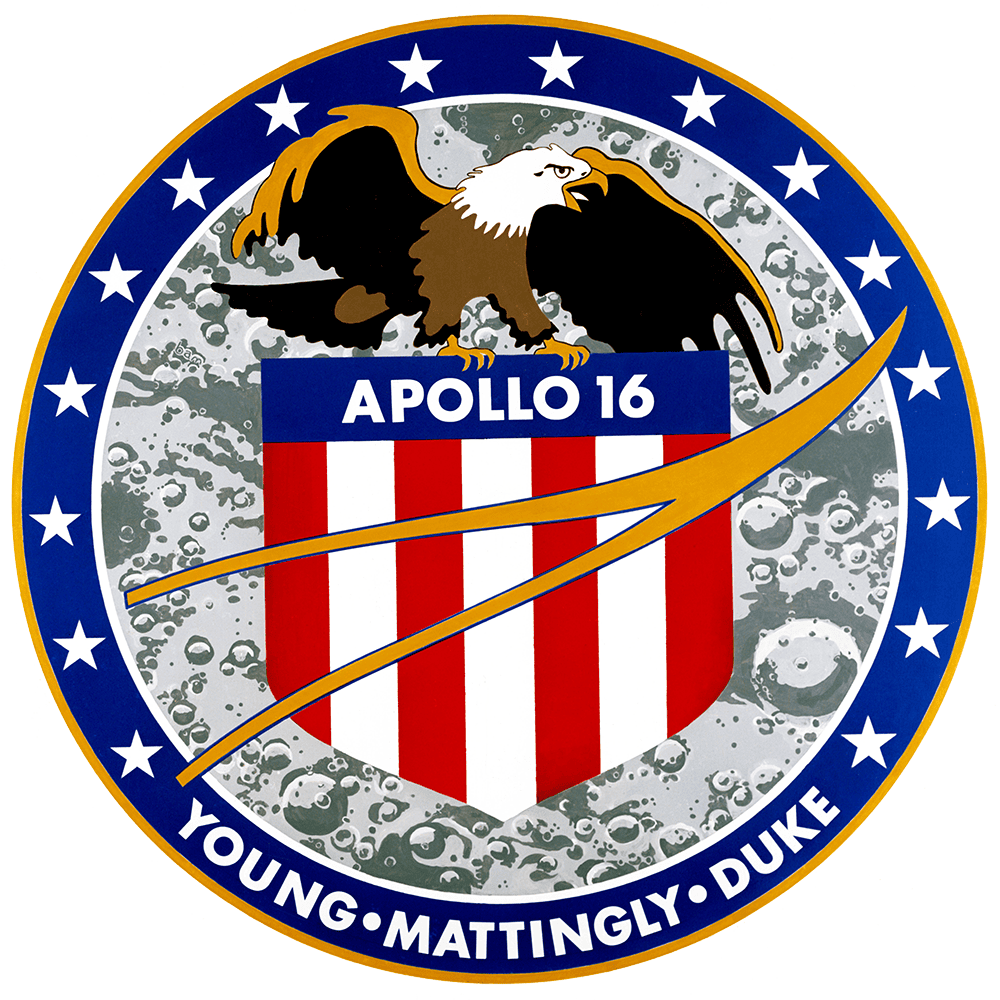
Apollo 16
Crew
- John Young (commander),
- Charlie Duke
(lunar module pilot), -
Thomas (Ken) Mattingly
(command module pilot)
The astronauts explored the Descartes region, took many pictures from space, and did experiments that required zero gravity in the orbiting command module.
Fun Fact:
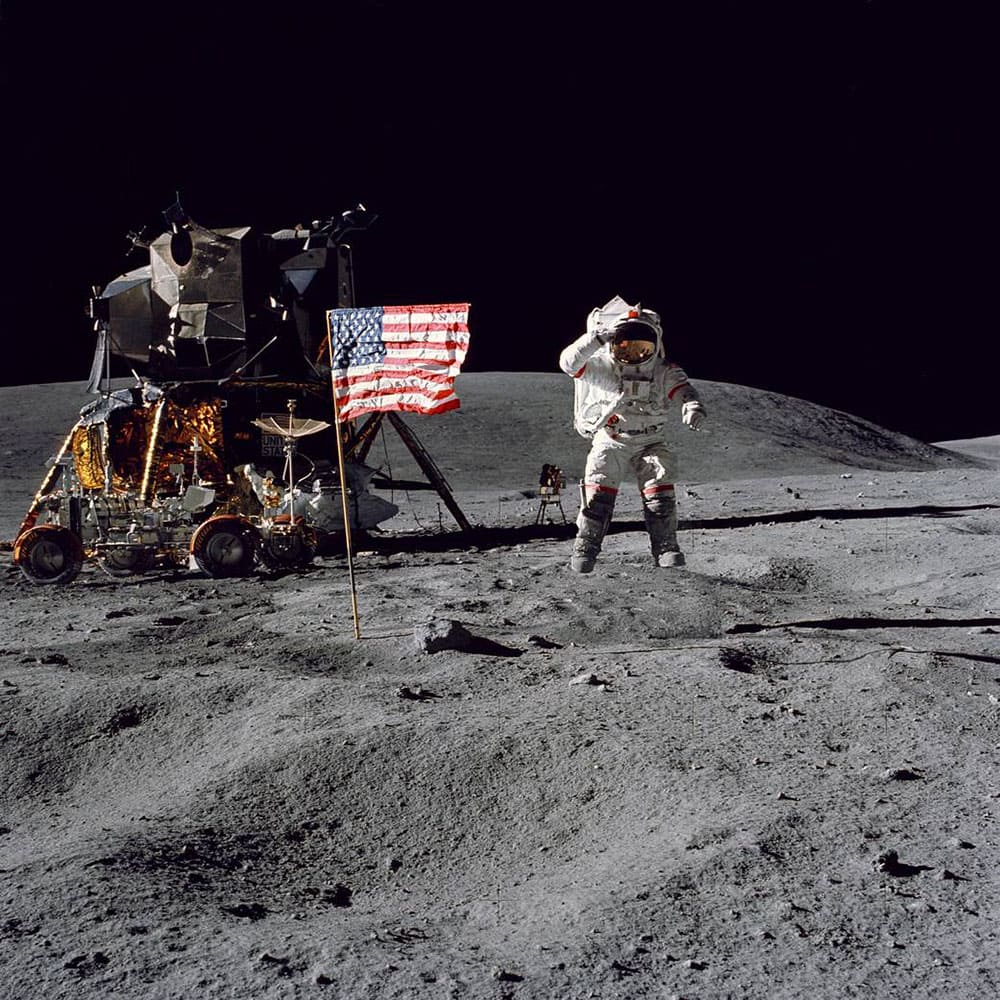
- This picture of John Young jumping on the Moon is my personal favorite of all the Apollo mission pictures!! He has jumped about 6 feet in the air even though he is wearing a 180pound suit!! Can you guess how he could do that?
- Command Module pilot Ken Mattingly used external cameras to take pictures of the Moon that NASA had previously not been able to get. But Mattingly had to do a 83 minute spacewalk in order to go and get the film cassettes (no digital pictures in those days).

Not-so-fun Fact:
- John Young once described to me an event that happened to him while he was walking on the Moon. The fan that circulated oxygen in his suit stopped. His actual comment to me was, “You don’t know the meaning of the word ‘quiet’ until your ventilation system stops when you are standing on the Moon.”
Apollo 17
Crew
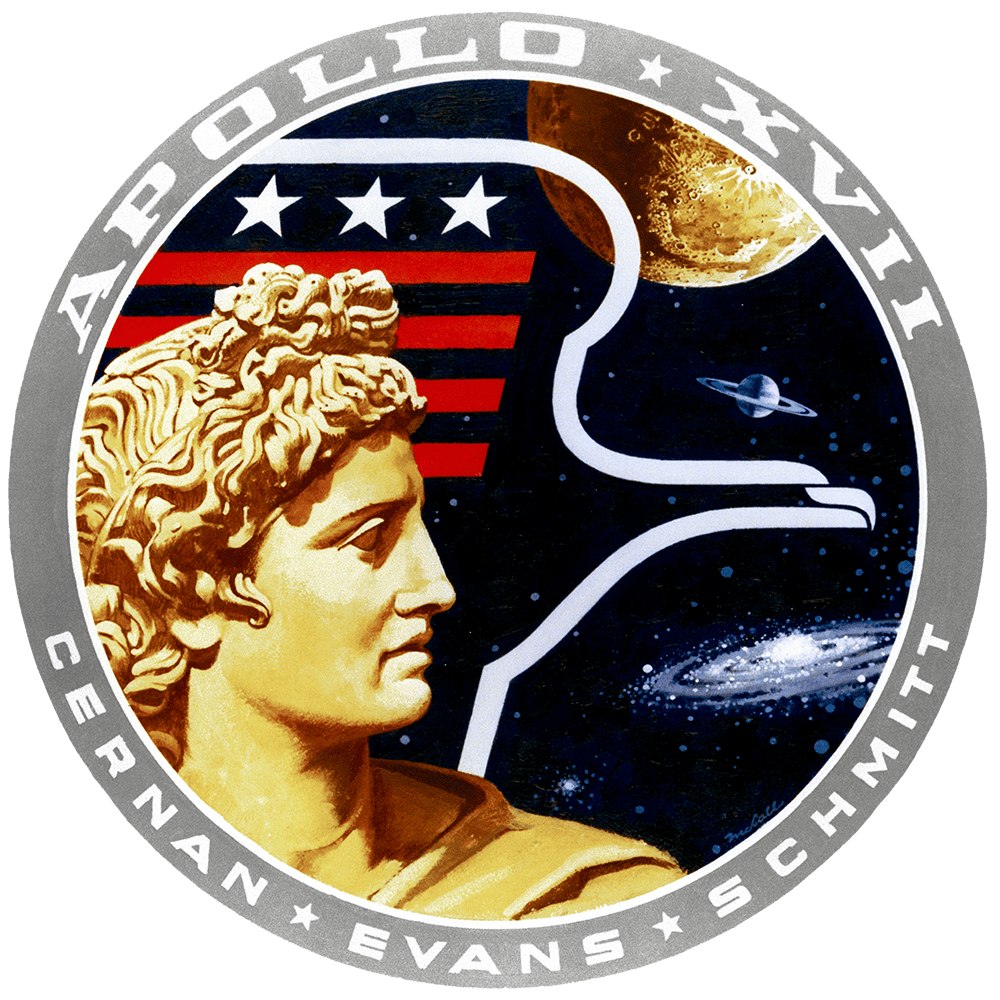
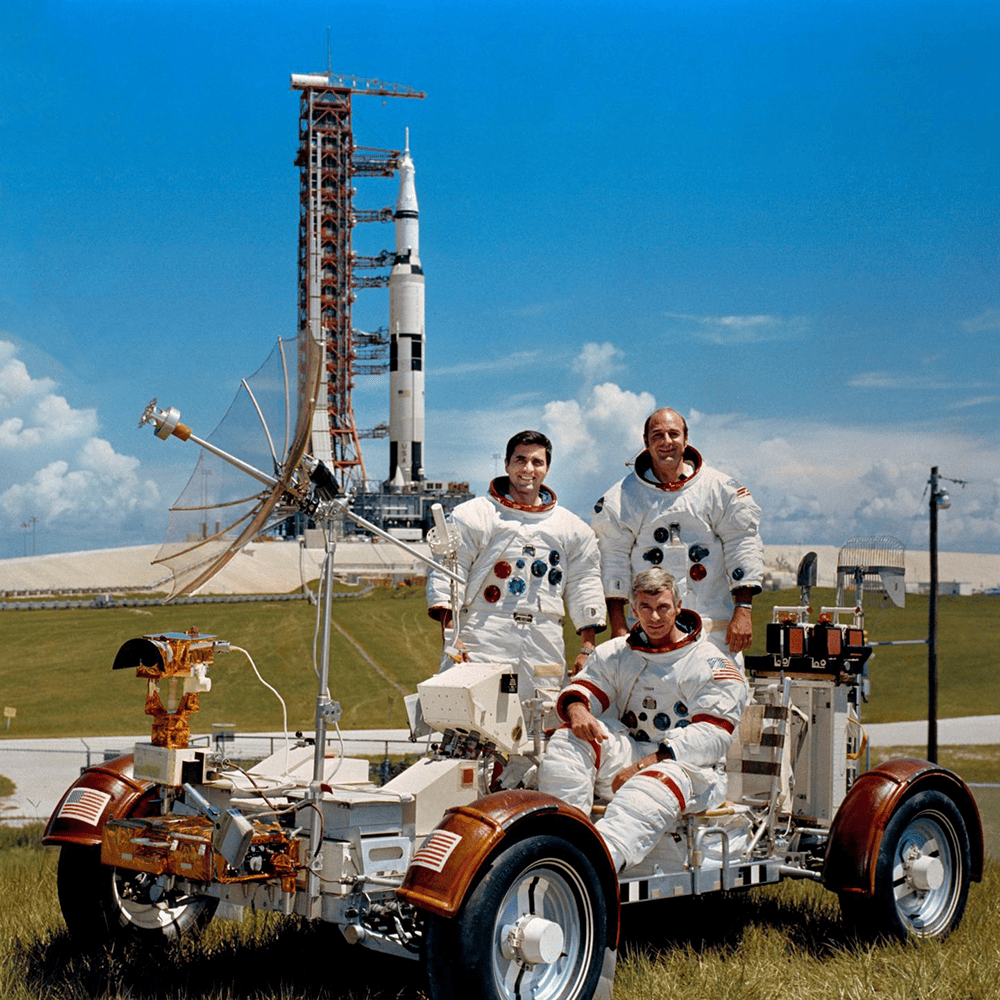
- Eugene Cernan (commander),
- Harrison Schmidt
(lunar module pilot), -
Ronald Evans
(command module pilot)
This mission focused mostly on geology. Geologist-astronaut Schmidt wandered off the intended trail to find the oldest rock we know of on the Moon (that rock is 4.46 billion years old!!!)

Fun Fact:
- Harrison Schmidt is the only geologist to walk on the Moon.
Not-so-fun Fact
- Gene Cernan is the last person to have walked on the Moon. And he did that in 1972. Maybe you will help us go back.
Are you ready for an Out Of This World Adventure?
-
Sale!

Cosmic Collection: Books 1–3 (Hardcover)
Original price was: $75.00.$67.50Current price is: $67.50. -
Sale!
Cosmic Collection: Books 1–3 (Paperback)
Original price was: $45.00.$40.50Current price is: $40.50. -
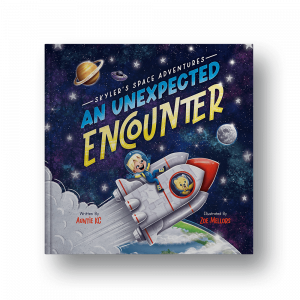
Skyler’s Space Adventures: An Unexpected Encounter (Hardcover)
$25.00 -

Skyler’s Space Adventures: An Unexpected Encounter (Paperback)
$15.00